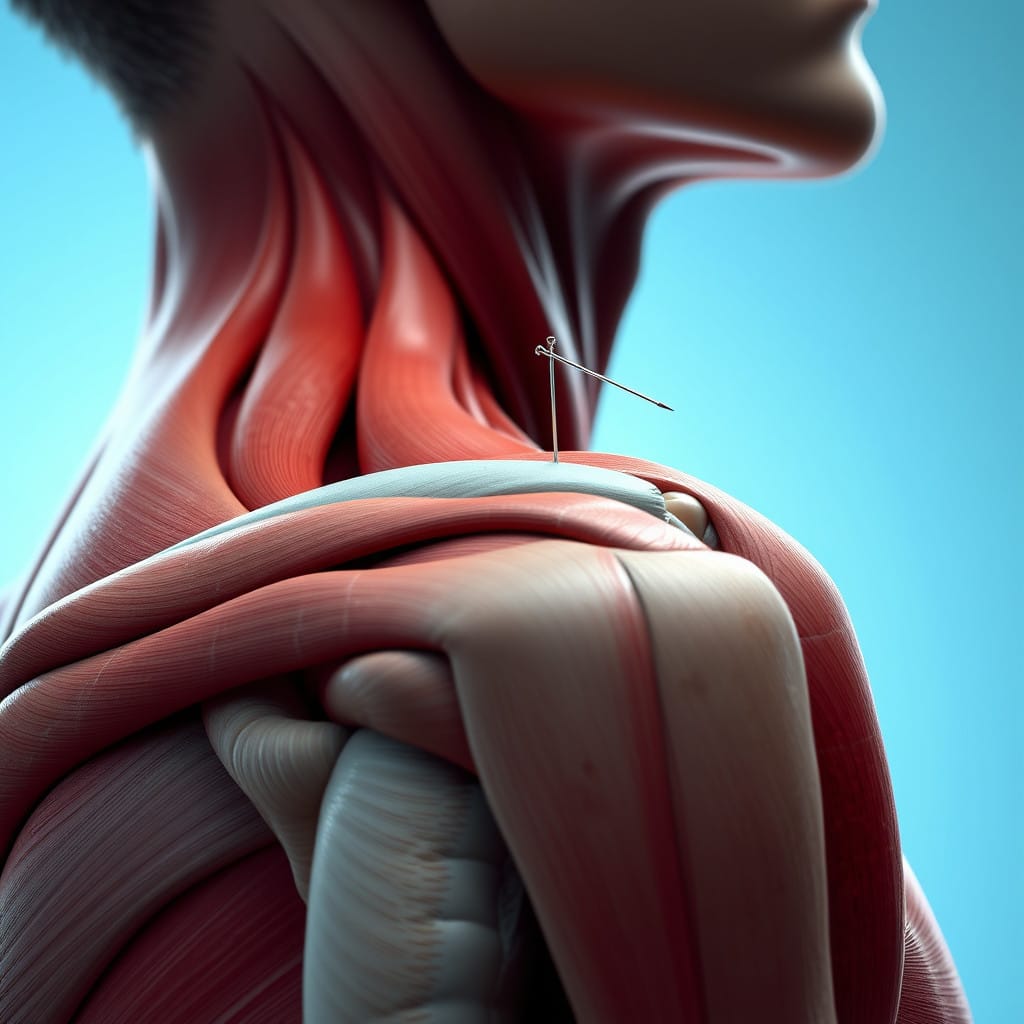
A recent study published in BMC Musculoskeletal Disorders investigated the effectiveness of myofascial trigger point dry needling (MTrP-DN) as an adjunct treatment for patients recovering from rotator cuff repair (RCR) surgery. The researchers conducted a randomized, sham-controlled trial to evaluate whether adding MTrP-DN to a multimodal rehabilitation protocol (MRh) would improve outcomes compared to sham dry needling (S-DN) with MRh.
Key findings:
- No significant difference in pain reduction: The study found no statistically significant difference in postoperative shoulder pain between the MTrP-DN and S-DN groups after 4 weeks of intervention.
- Limited impact on secondary outcomes: There were no significant differences between groups in range of motion, strength, or shoulder function as measured by the Shoulder Pain and Disability Index (SPADI).
- Small effect sizes: While some measures showed small effect sizes favoring MTrP-DN, the overall impact was relatively minor.
- Adverse events: Both groups experienced minor adverse events, with the MTrP-DN group reporting more instances of bleeding and pain during the procedure, while the S-DN group had more bruising.
- Within-group improvements: Both groups showed significant improvements in all outcome measures over the course of the study.
The researchers concluded that adding MTrP-DN to a multimodal rehabilitation protocol did not provide statistically significant benefits for patients recovering from RCR surgery. However, they noted that the use of subcutaneous needling as a sham treatment may have masked some potential benefits of MTrP-DN.
This study highlights the complexity of managing postoperative shoulder pain and suggests that further research with larger sample sizes, different control groups, and longer follow-up periods is needed to fully understand the potential role of dry needling in post-RCR rehabilitation.
[Link to original article: https://bmcmusculoskeletdisord.biomedcentral.com/articles/10.1186/s12891-024-00555-8%5D



 Glenn Wellmann DPT
Leave a comment