Disclaimer: This blog post is for informational purposes only and should not be considered medical advice. Every patient’s recovery is unique, and you should always follow the specific instructions provided by your healthcare team.
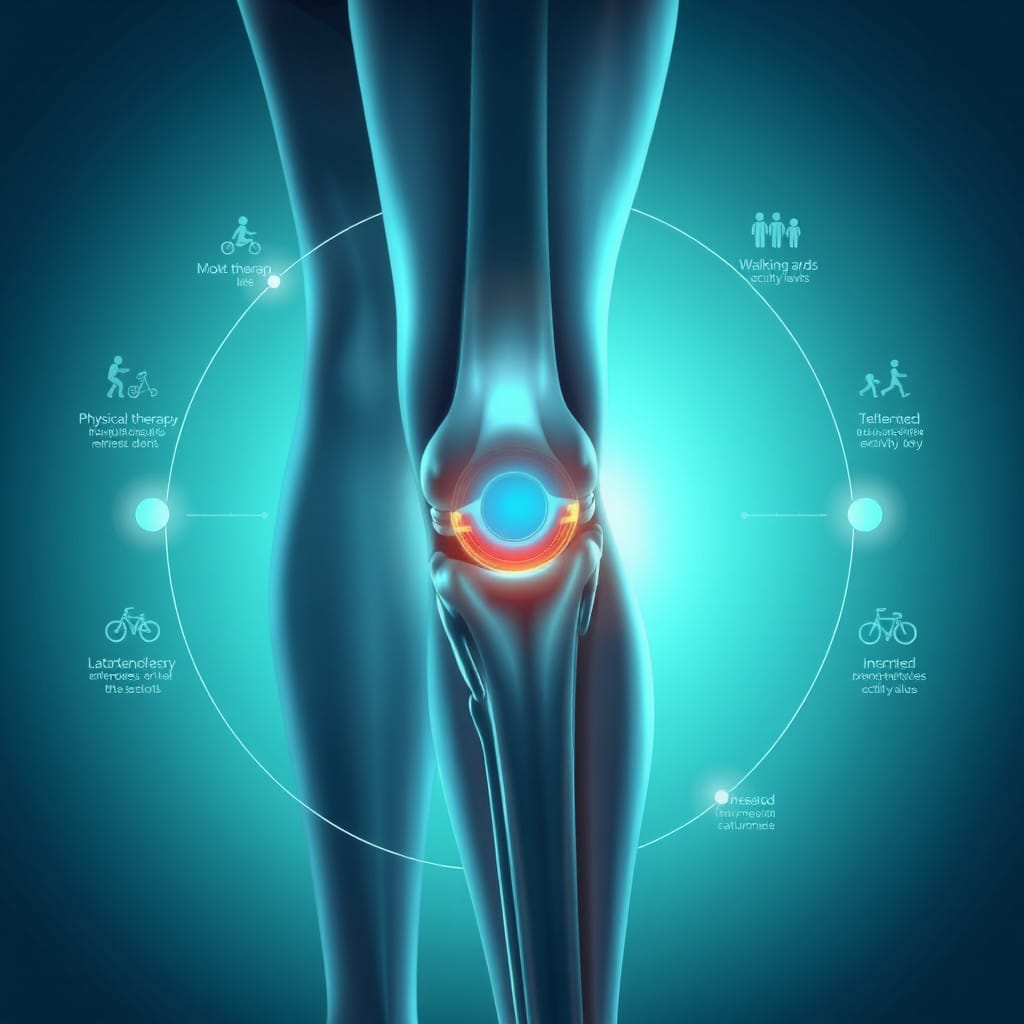
As an orthopedic physical therapist, I often work with patients recovering from total knee arthroplasty (TKA), also known as total knee replacement. Understanding the typical recovery timeline can help set realistic expectations and guide your rehabilitation journey. Let’s explore what you might experience in the weeks and months following your surgery.
Immediate Post-Surgery (Days 1-3)
The first few days after surgery are crucial for initiating your recovery process:
- You’ll likely experience pain and swelling, which will be managed with medication and other interventions[5].
- Your healthcare team will encourage you to start moving and walking with assistance, often on the same day as your surgery[7].
- You may begin simple exercises to improve circulation and prevent blood clots.
Early Recovery (Weeks 1-6)
During this phase, you’ll see significant improvements in your mobility and function:
- Pain and swelling will gradually decrease, though some discomfort is still normal[5].
- You’ll work with a physical therapist to improve your range of motion and strengthen your knee.
- Most patients can walk with a cane or walker by the end of this period[1].
- You may start more advanced exercises, including stationary cycling and gentle resistance training.
Mid-Recovery (Weeks 6-12)
This stage focuses on building strength and improving function:
- Many patients can resume light daily activities and may return to sedentary work.
- Your physical therapy will intensify, incorporating more challenging exercises.
- You’ll work on improving your gait and balance to enhance overall mobility.
- Some patients may begin low-impact activities like swimming or using an elliptical machine.
Late Recovery (3-6 months)
During this period, you’ll continue to see gradual improvements:
- Most patients can resume many of their normal activities, including light recreational sports.
- Your physical therapy may focus on sport-specific or activity-specific exercises.
- You’ll continue to work on strength, endurance, and functional movements.
Long-Term Recovery (6 months and beyond)
The recovery process continues well beyond the six-month mark:
- Many patients report ongoing improvements in function and pain reduction for up to a year or more after surgery[1][3].
- You may be able to return to more demanding activities, but always consult with your surgeon and physical therapist first.
- Continued exercise and maintaining a healthy lifestyle are crucial for long-term success.
Factors Affecting Recovery
It’s important to note that everyone’s recovery timeline is unique. Factors that can influence your progress include:
- Age and overall health
- Adherence to rehabilitation protocols
- Pre-surgery fitness level
- Presence of other medical conditions
Enhancing Your Recovery
Research has shown that certain approaches can potentially improve your recovery:
- Enhanced Recovery After Surgery (ERAS) protocols: These comprehensive care pathways can help optimize your recovery and reduce complications[7].
- Blood Flow Restriction (BFR) training: This technique may help improve muscle strength and mass, especially in the early stages of rehabilitation when heavy loading isn’t possible[8].
- Music therapy: Some studies suggest that listening to music before and after surgery can help reduce anxiety and pain[9].
Remember, your healthcare team will provide you with a personalized recovery plan tailored to your specific needs and progress. Always follow their guidance and communicate any concerns or questions you may have throughout your recovery journey.
By understanding this general timeline and staying committed to your rehabilitation, you’ll be well-equipped to navigate your recovery from total knee arthroplasty and return to the activities you enjoy.
Citations:
[1] https://pubmed.ncbi.nlm.nih.gov/36996947/
[2] https://www.semanticscholar.org/paper/5d08074a1061660780b7eb2556a568f745f12553
[3] https://www.ncbi.nlm.nih.gov/pmc/articles/PMC11093842/
[4] https://www.ncbi.nlm.nih.gov/pmc/articles/PMC10787984/
[5] https://www.ncbi.nlm.nih.gov/pmc/articles/PMC10399043/
[6] https://www.ncbi.nlm.nih.gov/pmc/articles/PMC9088230/
[7] https://www.ncbi.nlm.nih.gov/pmc/articles/PMC7006728/
[8] https://www.ncbi.nlm.nih.gov/pmc/articles/PMC10199744/
[9] https://pubmed.ncbi.nlm.nih.gov/36031855/
[10] https://www.ncbi.nlm.nih.gov/pmc/articles/PMC10471706/



 Glenn Wellmann DPT
Leave a comment