
Chronic pain, defined as persistent discomfort lasting beyond three to six months, affects approximately 20% of adults globally and remains a leading cause of disability and reduced quality of life12. Traditional approaches often rely on pharmacological interventions, particularly opioids, which carry risks of dependency and adverse side effects14. In contrast, physical therapy (PT) offers a multifaceted, evidence-based strategy to address both the symptoms and underlying causes of chronic pain. This report synthesizes current research on PT’s mechanisms, efficacy, and long-term benefits, demonstrating its role as a cornerstone of non-invasive pain management.
Mechanisms of Physical Therapy in Chronic Pain Management
Physical therapy employs a combination of biomechanical, neuromuscular, and educational interventions to mitigate chronic pain. These mechanisms target physiological and psychological pathways to restore function and reduce discomfort.
Targeted Exercise Interventions
Exercise forms the foundation of PT, addressing muscle weakness, joint instability, and mobility limitations that exacerbate pain. Strengthening exercises focus on core stability, postural alignment, and specific muscle groups to alleviate strain on affected areas35. For instance, core-strengthening routines reduce mechanical stress on the lumbar spine, benefiting individuals with chronic lower back pain26. Aerobic conditioning, such as stationary biking or swimming, enhances cardiovascular health without overloading joints, while flexibility exercises improve range of motion and reduce stiffness37. These interventions collectively enhance tissue resilience and metabolic function, fostering gradual pain reduction7.
Manual Therapy Techniques
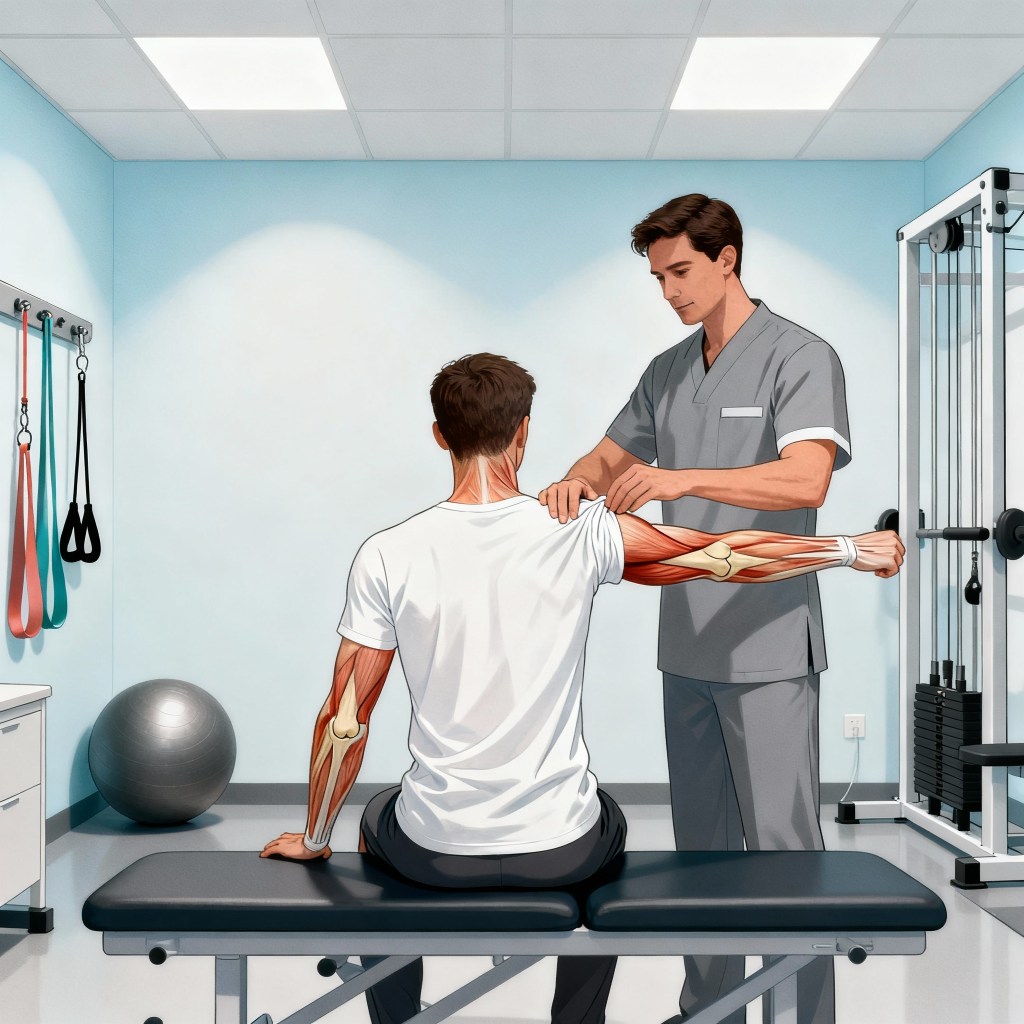
Manual therapy, including soft tissue mobilization and joint manipulation, directly modulates pain perception by reducing muscle tension and improving circulation45. Myofascial release techniques alleviate restrictions in connective tissue, addressing compensatory movement patterns that contribute to chronic discomfort48. For example, targeted massage in patients with fibromyalgia has been shown to decrease trigger point sensitivity and improve sleep quality68. Such hands-on approaches complement exercise by preparing tissues for activity and accelerating healing5.
Modalities and Adjunctive Therapies
PT integrates modalities like heat, cold, ultrasound, and electrical stimulation to manage acute flare-ups and inflammation. Heat therapy relaxes musculature and increases blood flow, whereas cryotherapy reduces swelling and numbs localized pain35. Neuromuscular electrical stimulation (NMES) reactivates atrophied muscles, promoting strength recovery in conditions like post-stroke paralysis or osteoarthritis57. These modalities provide immediate symptomatic relief, enabling patients to engage more effectively in therapeutic exercises3.
Patient Education and Behavioral Strategies
Education empowers patients to self-manage pain through ergonomic adjustments, activity modification, and stress reduction techniques. Physical therapists guide individuals in pacing activities to avoid overexertion and incorporate mindfulness practices to address the psychological toll of chronic pain16. By fostering self-efficacy, PT reduces fear-avoidance behaviors—a common barrier to recovery in conditions like complex regional pain syndrome (CRPS)27.
Evidence-Based Benefits of Physical Therapy
Clinical studies underscore PT’s capacity to improve physical function, psychological well-being, and overall quality of life in chronic pain populations.
Reduction in Pain Severity
A 2017 meta-analysis of 18 systematic reviews found that structured exercise programs yielded small-to-moderate reductions in pain intensity across conditions such as osteoarthritis, fibromyalgia, and chronic low back pain7. For example, aquatic therapy decreased pain scores by 30–40% in rheumatoid arthritis patients, attributed to buoyancy reducing joint loading7. Similarly, resistance training in osteoarthritis cohorts improved cartilage metabolism, correlating with long-term pain relief7.
Enhanced Mobility and Functional Capacity
PT interventions consistently improve physical performance metrics, including gait speed, balance, and endurance. In a study of chronic back pain patients, a 12-week core stabilization program increased functional mobility by 25%, measured via sit-to-stand tests and walking distances68. Such gains translate to daily activities, reducing dependence on assistive devices and enhancing independence57.
Psychological and Emotional Benefits
Chronic pain is closely linked to depression, anxiety, and sleep disturbances, creating a cyclical relationship that impedes recovery12. PT disrupts this cycle by promoting endorphin release through aerobic exercise and fostering social interaction during group therapy sessions78. Cognitive-behavioral strategies integrated into PT programs further reduce catastrophizing and improve coping mechanisms, as evidenced by a 20% reduction in depression scores among fibromyalgia patients undergoing multidisciplinary PT67.
Comparative Effectiveness Against Pharmacological Interventions
While opioids and NSAIDs provide transient relief, PT offers sustainable advantages without dependency risks.
Opioid-Sparing Effects
PT reduces reliance on analgesics by addressing pain origins rather than masking symptoms. A 2024 study found that patients participating in PT for chronic low back pain were 45% less likely to receive opioid prescriptions over six months compared to controls48. This aligns with CDC guidelines advocating PT as first-line therapy for musculoskeletal pain13.
Long-Term Cost-Effectiveness
Though PT requires upfront time investment, it lowers long-term healthcare expenditures by preventing recurrent injuries and hospitalizations. For instance, preemptive PT in osteoarthritis patients delayed surgical interventions by an average of 5.7 years, saving an estimated $12,000 per patient annually57.
Patient-Centered Approaches in Modern Physical Therapy
Personalization is critical to PT’s success, as chronic pain etiologies vary widely.
Individualized Treatment Plans
Therapists conduct thorough assessments, including movement analysis and pain mapping, to design tailored regimens. A runner with patellofemoral pain syndrome might receive eccentric strengthening for the quadriceps, while a desk worker with cervicalgia benefits from postural correction and scapular stabilization26.
Integration of Technology
Wearable sensors and telehealth platforms enable real-time monitoring of home exercises, improving adherence and precision. Biofeedback devices help patients visualize muscle activation patterns, enhancing engagement in rehab protocols48.
Conclusion
Physical therapy represents a paradigm shift in chronic pain management, prioritizing functional restoration over passive treatment. Through biomechanical optimization, psychological support, and patient education, PT empowers individuals to reclaim autonomy and improve quality of life. Policymakers and clinicians must expand access to PT services, particularly in underserved communities, to mitigate the global burden of chronic pain. Future research should explore optimal dosing of therapeutic modalities and long-term outcomes across diverse demographic groups.
This report synthesizes insights from clinical studies and expert guidelines to underscore PT’s viability as a safe, effective, and sustainable alternative to pharmacological interventions. By addressing the biopsychosocial dimensions of pain, physical therapy aligns with contemporary healthcare’s shift toward holistic, patient-centered care.
Citations:
- https://corehealthchiropractor.com/benefits-of-physical-rehabilitation-for-chronic-pain-management/
- https://www.doctorshosplaredo.com/about/blog/addressing-chronic-pain-physical-therapy
- https://www.webmd.com/pain-management/physical-therapy
- https://www.athletico.com/2024/09/04/can-physical-therapy-help-manage-my-chronic-pain/
- https://minivasivepain.com/pain-management-physical-therapy/
- https://empowerpt.com/chronic-pain-physical-therapy/
- https://pmc.ncbi.nlm.nih.gov/articles/PMC5461882/
- https://losalamitospt.com/breaking-free-managing-chronic-pain-with-the-magic-of-physical-therapy/
- https://www.cascadeortho.net/blog-post-base/8-key-benefits-of-physical-therapy-for-pain-management
- https://solas.health/blog/physical-therapy-medication/
- https://www.choosept.com/guide/physical-therapy-guide-chronic-pain
- https://www.provocollege.edu/blog/ways-physical-therapist-assistants-can-help-manage-chronic-pain/
- https://pmc.ncbi.nlm.nih.gov/articles/PMC5498791/
- https://www.reboundperformancept.com/blog/measuring-progress-through-pain
- https://my.clevelandclinic.org/health/treatments/physical-therapy
- https://www.unitekcollege.edu/blog/the-role-of-ptas-in-chronic-pain-management/
- https://www.iasp-pain.org/education/curricula/iasp-curriculum-outline-on-pain-for-physical-therapy/
- https://www.hss.edu/conditions_pain-science-education-physical-therapy-chronic-pain.asp



 Glenn Wellmann DPT
Leave a comment