
Living with shoulder pain can be frustrating and limiting, but new research shows that a criteria-based progressive exercise program is highly effective in helping patients regain strength, motion, and quality of life—without surgery. This study gives hope and clear action steps for anyone with rotator cuff-related shoulder pain looking for effective rehab solutions.
What is “Criteria-Based Progressive Rehab”?
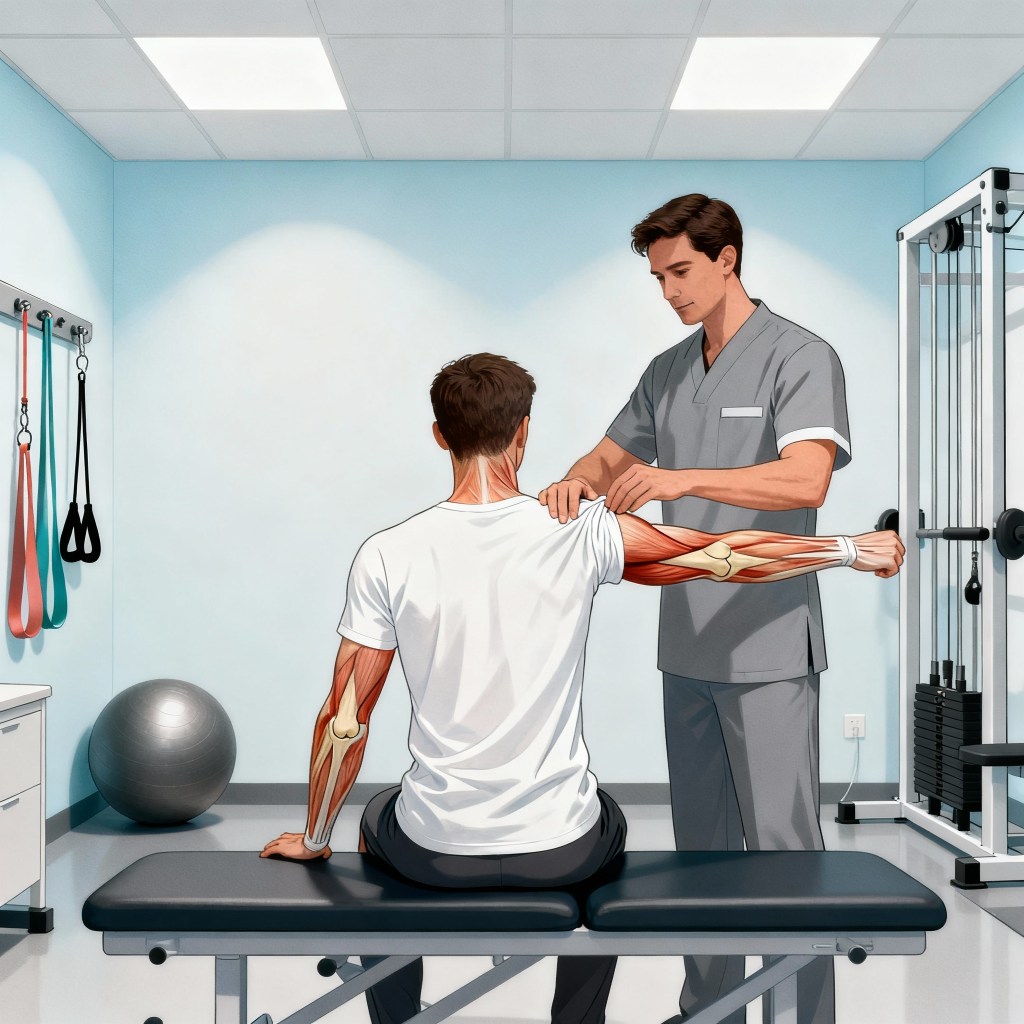
A criteria-based progressive shoulder exercise program is a structured physical therapy approach designed to guide your rehab through clear benchmarks:
- The program lays out the exact exercises, starting points, and stepwise progressions.
- Advancement is based on reaching specific clinical goals, like pain reduction, improved strength, or increased shoulder movement.
- If progress stalls, the program includes an algorithm for surgical referral, ensuring you get the right care at each step.
Key Findings From the Research
- Rapid and Sustained Pain Relief: Patients saw significant reduction in shoulder pain at rest, at night, and with activity—all within the first 6 weeks, and continued improvement through 26 weeks.
- Restored Range of Motion: The biggest improvements were in shoulder abduction and external rotation; patients could lift and move their arms better by week 6, with ongoing gains at 12 and 26 weeks.
- Improved Strength: Targeted exercises resulted in much stronger shoulders, especially noticeable between weeks 6–12.
- Quality of Life Boost: Using the Western Ontario Rotator Cuff (WORC) score, patients reported better daily function and less impact from their shoulder condition—even before the program ended.
- Clear Pathways for Non-Responders: If certain progress wasn’t met, patients followed a built-in referral pathway for orthopedic surgical consult, ensuring everyone’s needs were addressed.
How to Apply These Findings to Your Rehab
Action Items for Patients:
- Engage with a physical therapist to begin a structured, criteria-based program. Ask for measurable benchmarks so you know how you’re progressing.
- Stick with both in-person and home exercises—the combination was key to success in the study.
- Expect meaningful decreases in pain and improvements in strength and movement within the first 6 weeks if you follow the program.
- Communicate regularly with your rehab team about progress and setbacks; persistent problems may require further evaluation, not just “more of the same.”
- Remember: surgery is not the first step—most can achieve dramatic improvement with guided exercise and education.
Takeaway Points
- Following a criteria-based, stepwise rehab plan for rotator cuff-related shoulder pain can restore function and reduce pain quickly.
- Structured progress tracking and early intervention lead to better outcomes.
- Patients can expect real improvement in daily life and confidence about their recovery.
Citations
Chepeha J, Silveira A, Sheps D, et al. A standardized criteria-based progressive shoulder exercise program is effective in managing rotator cuff-related shoulder pain: A prospective cohort study. PLoS One. 2025;20(7):e0328728. doi:10.1371/journal.pone.0328728.


 Glenn Wellmann DPT
Leave a comment