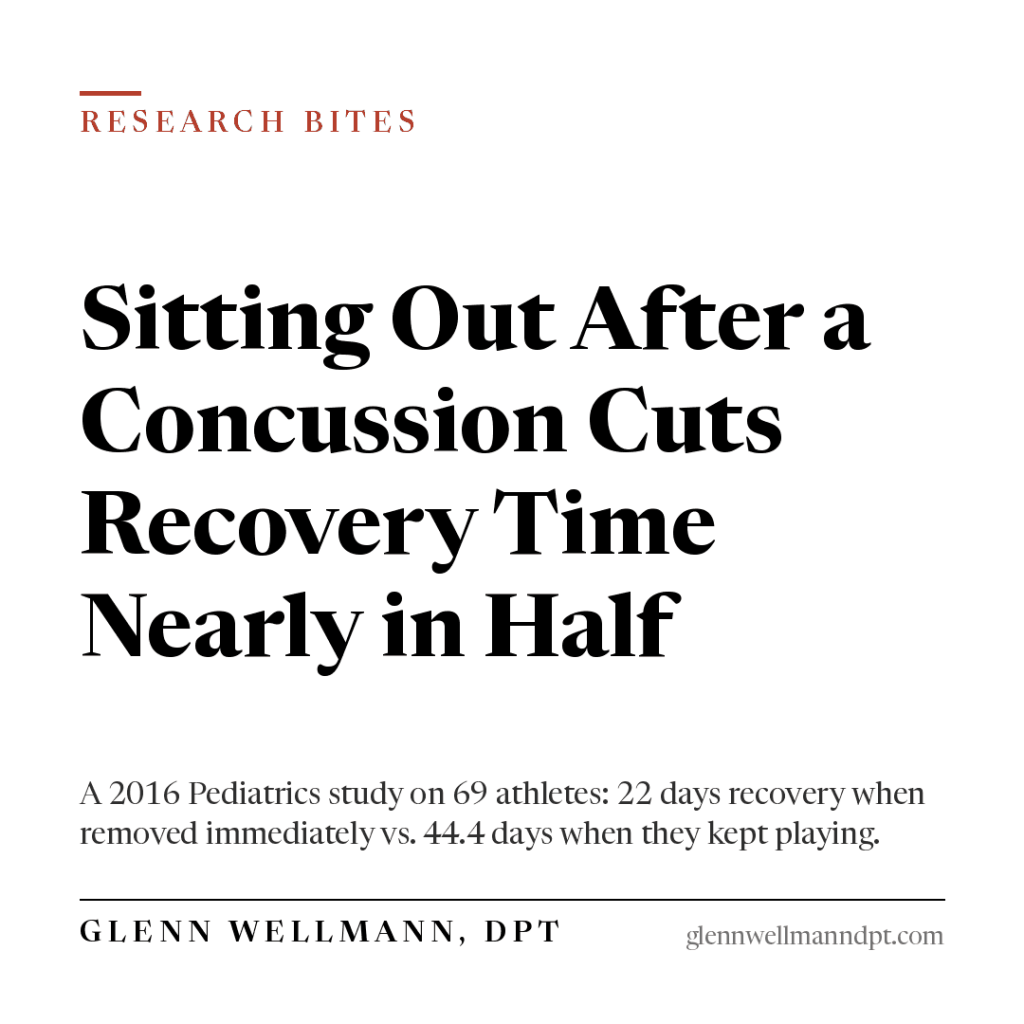
When an athlete takes a hit to the head and insists they’re fine to keep playing, does pulling them actually change how long they’re out? A 2016 study says yes, and the difference is bigger than most people assume.
The study, briefly. Researchers at the UPMC Sports Medicine Concussion Program followed 69 athletes ages 12 to 19 with a diagnosed sport-related concussion in a prospective study (Elbin et al., Pediatrics, 2016). Thirty-five athletes were removed from play immediately after the injury; the other 34 kept playing for an average of about 19 more minutes before coming out. Researchers then tracked how long each group took to fully recover.
What they found. Athletes who kept playing took nearly twice as long to recover: an average of 44.4 days, compared to 22.0 days for the athletes pulled immediately (a statistically significant difference, p = .003). They were also nearly nine times more likely to have a protracted recovery of 21 days or longer: 80% of the play-through group crossed that mark, versus just 31% of the group removed right away.
Why it matters for you. If you’re a parent, a coach, or the athlete yourself, the takeaway is simple: the “shake it off and finish the shift” instinct works against you physiologically. Removing an athlete from play the moment a concussion is suspected isn’t overly cautious, it’s the single biggest lever you have for cutting weeks off their recovery. It’s the same logic behind building injury prevention habits before you ever get hurt: the earlier you intervene, the less time you lose.
If you or an athlete you coach are working through a return-to-play decision after a head injury, a Comprehensive Evaluation can help build the objective benchmarks you need, not just “how do you feel,” before clearing them to get back into competition.




Leave a Reply