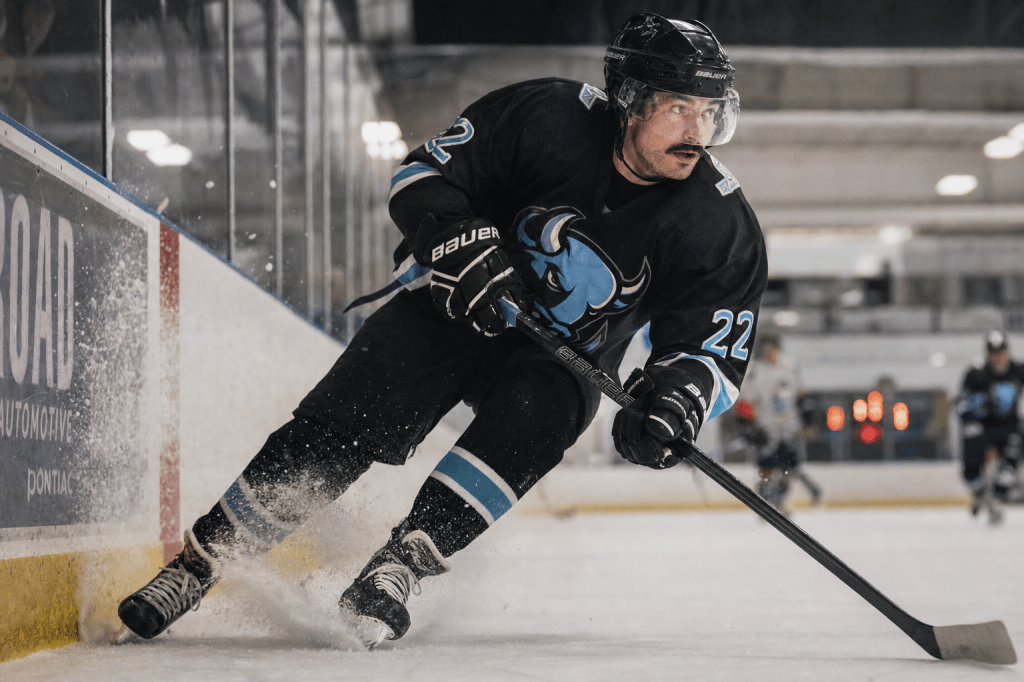
It’s Sunday night. Third period. Your positioning has been solid all game, but somewhere in the second period your legs got heavy. A puck rings off the boards and your brain knows exactly where to go — your body just doesn’t get there first.
That’s one of the most common things I hear in the clinic here in Parker from our adult league ice hockey players. Players feel like they’ve “lost a step,” and more often than not the issue isn’t aerobic fitness or technique. It’s explosive power — and it’s trainable. This post walks through what explosive power is, why it matters, and how to build it off the ice.
What Explosive Power Actually Is
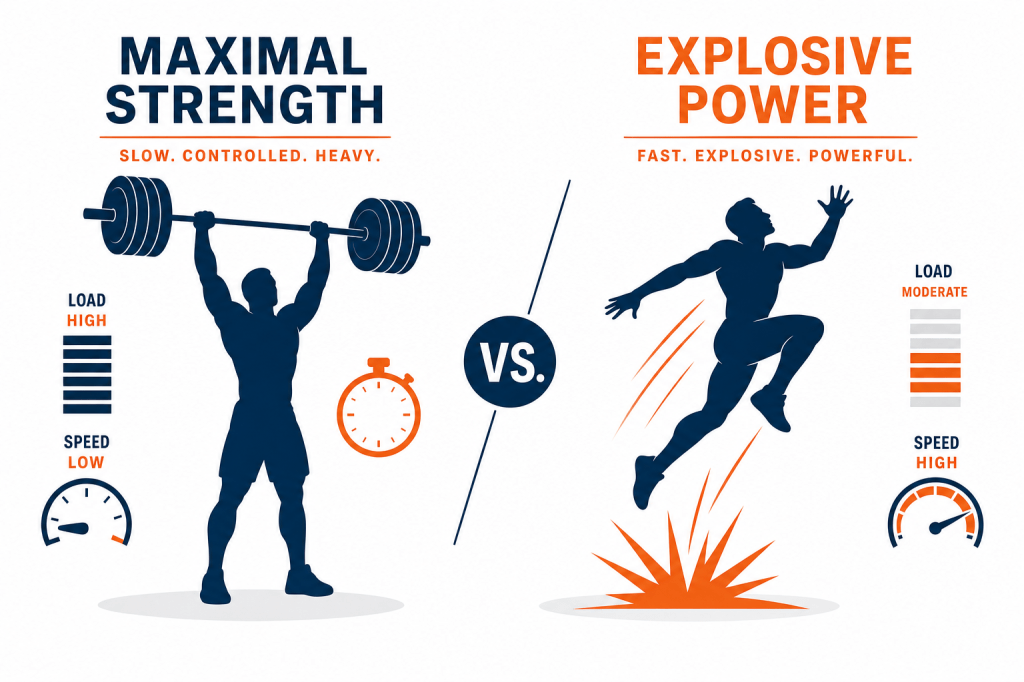
When most people think about getting stronger for sports, they think about lifting heavier weight. That matters — but in hockey, what separates players is rarely maximal strength. It’s rate of force development: how fast you can produce that strength. Explosive power is strength and speed combined, and developing it is the whole game.
Think about the moment a puck turns over in the neutral zone. There’s a two-second window and the first player there wins the play. A player with more explosive power doesn’t necessarily have a higher top speed — they just get from zero to moving faster. That first step is built in the weight room, not the rink.
One key concept here is the stretch-shortening cycle, or SSC. Think of your muscles and tendons like a rubber band: load them quickly and they store elastic energy that snaps back powerfully on contraction. Hockey is built on short, powerful bursts — a push off the boards, a direction change, a battle along the wall. It’s dozens of three-to-five-second explosions repeated over sixty minutes, not an endurance marathon.
What the Research Says
The evidence here is solid and encouraging.
The 2026 ACSM Position Stand on Resistance Training (Medicine & Science in Sports & Exercise, April 2026) confirmed that power is best developed using moderate loads — roughly 30 to 70 percent of your one-rep max — with an emphasis on moving fast during the lifting phase. Olympic-style lifting and power-focused resistance training ranked among the most effective approaches. You don’t need to grind heavy slow reps. You need to move with intent.
A 2024 study in the Journal of Human Kinetics found that sub-elite hockey players who scored higher on off-ice power tests — vertical jump and broad jump — also skated faster in sprint and repeated-sprint tests. The players who trained explosive power off the ice were faster on it. A 2025 study in Frontiers in Physiology found that elite male players who followed a progressive program — mobility and stability first, then strength, then plyometrics — showed significant improvements in 15-meter and 30-meter skating speed. The progression matters, and the work pays off on the ice.
Why This Matters for Adult League Players Specifically
One thing I tell patients regularly is that you don’t have to choose between training smart and training efficiently. Adult hockey players are also accountants, parents, and commuters — you have two or three days a week to train, not two-a-days. Explosive power training doesn’t require high volume. It requires quality, intent, and a plan you can stick to.
Defaulting to jogging or cycling as your only off-ice work leaves real performance on the table. You’ll maintain your aerobic base but still feel sluggish in the third period because your neuromuscular system isn’t primed for repeated bursts. The same hip and leg power you build for hockey transfers directly to other demanding activities — a skier driving into a carve, or a hiker pushing off steep terrain on tired legs.
5 Practical Exercises to Start Building Power
These movements are safe for non-elite adults training without a coach present. Start conservatively, focus on quality, and progress gradually.
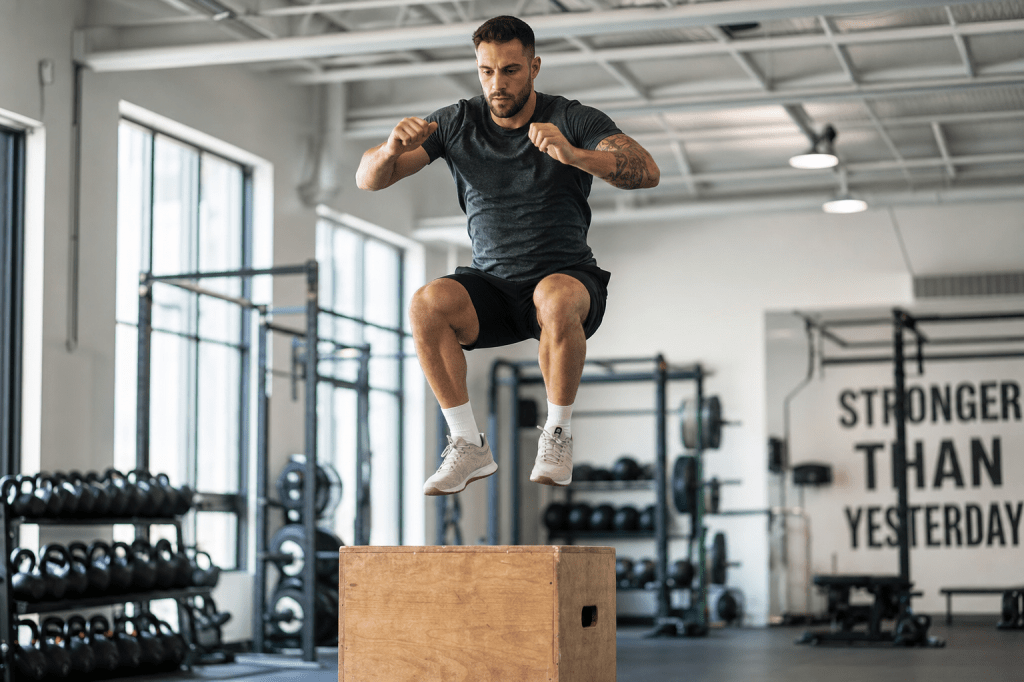
- Box Jumps: Start with a 12 to 18 inch box and focus on maximal effort on the jump and a soft, controlled landing. Reset fully between reps — rushing is where injuries happen. Three sets of 4 to 6 reps, twice per week, is enough stimulus to adapt without overtaxing your system.
- Goblet Squat to Press: Hold a moderate kettlebell or dumbbell at chest height, squat with control, then drive out of the bottom aggressively and press overhead. This pairs lower-body explosive drive with upper-body power in one movement. Three sets of 8, focusing on speed out of the bottom.
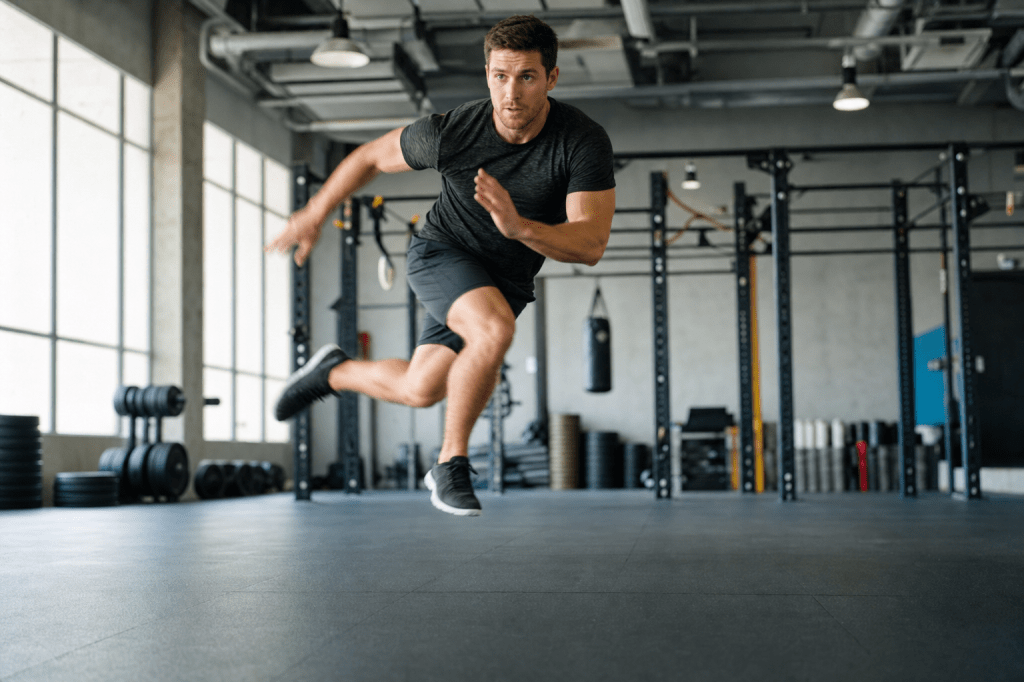
- Lateral Bounds (Skater Jumps): Push off one foot laterally, stick the landing on the opposite foot, and pause for one to two seconds before bounding back. That pause builds the eccentric hip control you need to decelerate and redirect — exactly what happens every time you cut on an edge.
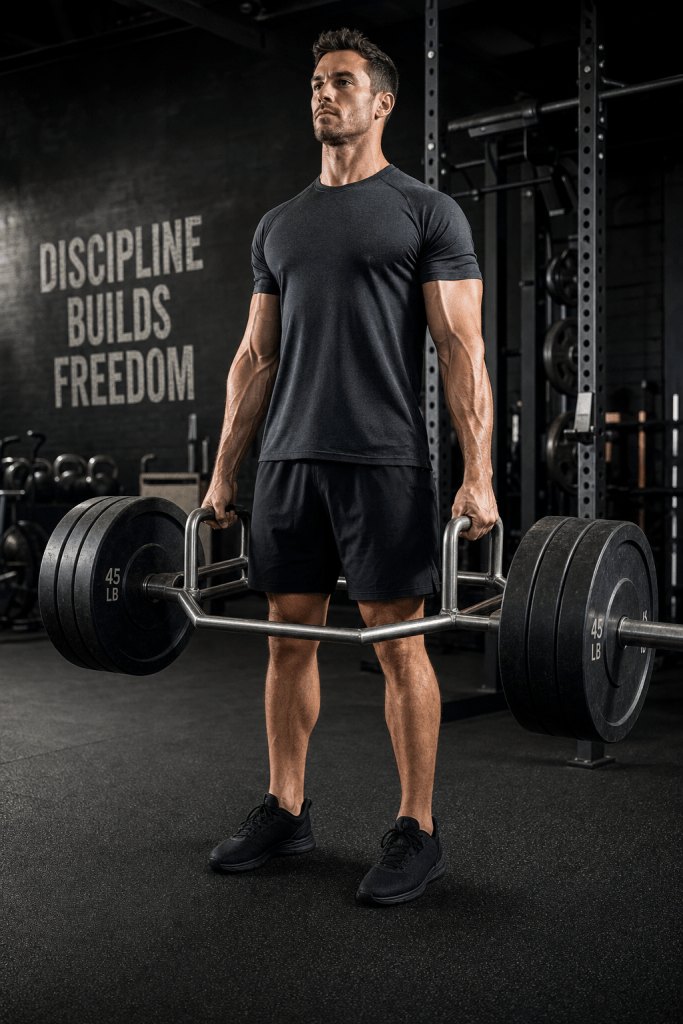
- Trap Bar Deadlift with a Fast Pull: The trap bar is one of the safest ways to load the hip hinge, and it maps directly to the power position in skating. Set your back flat, brace your core, and drive the floor away as explosively as possible on the way up. The intent to move fast is what makes this a power exercise.
- Rest is part of the program: Power training taxes the nervous system, not just the muscles. Rest at least 60 to 90 seconds between sets. If you’re huffing through every set without a real break, you’ve drifted into conditioning work — which has its place, but it isn’t power development.
When to See a Physical Therapist
Power training is safe for most healthy adults, but some situations call for professional guidance. Hip, knee, or groin pain during training or skating — even discomfort you’ve been managing around — is worth evaluating before it sidelines you. A plateau despite consistent training, a return from lower-extremity injury, or simply not knowing where to start safely are all good reasons to reach out. If you’re in the Parker or Denver area, the team at CACC Physical Therapy can help you build a personalized plan that fits your schedule, your sport, and your body.
Get After It
You don’t need a sports scientist or a gym that costs more than your hockey gear. A few intentional sessions per week, built around the right movements, adds up to a real difference on the ice — a faster first step, stronger battles along the boards, and more gas in the third period.
Start now.
Author: Glenn Wellmann, PT, DPT, CSCS — Doctor of Physical Therapy and Certified Strength and Conditioning Specialist at CACC Physical Therapy, Parker, CO.
Sources:
- ACSM Position Stand. Medicine & Science in Sports & Exercise, April 2026.
- Journal of Human Kinetics, 2024. Off-ice power and on-ice sprint performance in sub-elite hockey players.
- Frontiers in Physiology, 2025. Functional strength training and skating speed in young elite male ice hockey players.


Leave a Reply