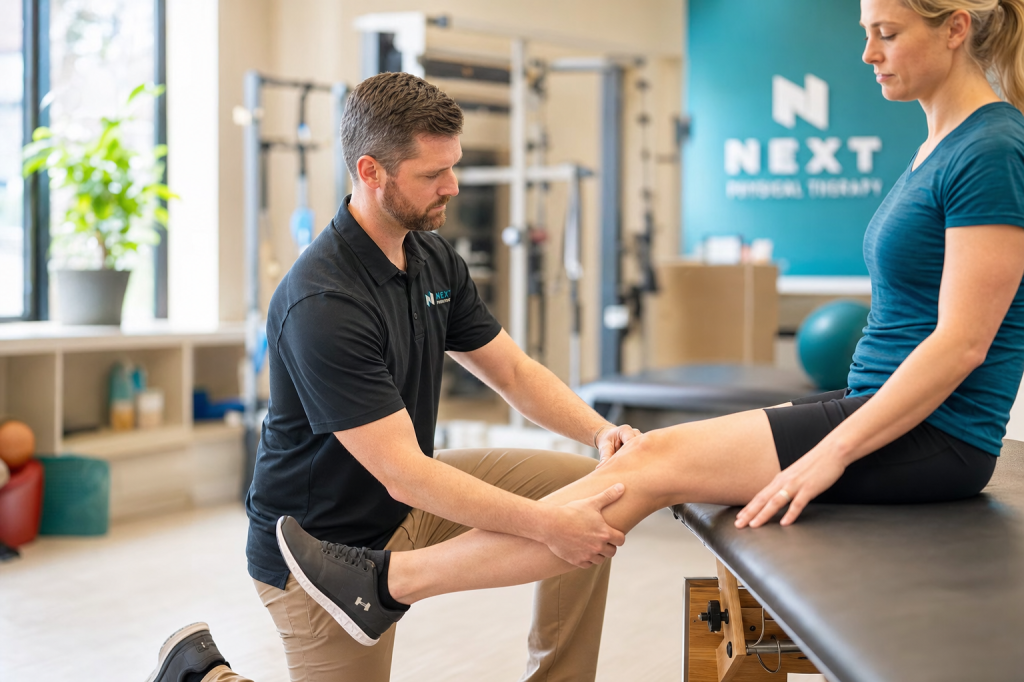
Most patients who come into my clinic ahead of a total knee arthroplasty (TKA) share a version of the same question: “Does physical therapy actually make a real difference, or is it just something I have to do?” It is a fair question. Surgery feels like the main event, and PT can seem like the afterthought. But a growing body of research from 2023 through 2026 is changing that picture significantly, and if you or someone you care for is approaching a knee replacement, this evidence is worth understanding before you walk into the operating room.
Starting PT Before Surgery Is Not Optional — It Is Strategic
There is a persistent assumption in orthopedic care that physical therapy begins the day after surgery. Recent research makes a compelling argument for rethinking that entirely.
A 2024 meta-analysis published in Bone & Joint Open found that patients who completed prehabilitation — structured physical therapy in the weeks before TKA — had a statistically significant reduction in hospital length of stay compared to those who did not (mean difference of -0.43 days, p < 0.001). They also reported less pain going into the procedure. Shorter hospital stays reduce infection risk, lower overall cost of care, and get patients into the recovery environment where they heal best: home.
A 2025 study in the Journal of Contemporary Clinical Practice deepened this point considerably. Researchers found a moderate-to-strong correlation (r = 0.61, p < 0.001) between preoperative quadriceps strength and a composite three-month recovery score. Patients in the highest strength tertile had Knee Society Scores of 82.3 compared to 69.4 for those in the lowest group, along with faster Timed Up and Go test performance and greater range of motion at follow-up.
The practical implication is direct: the strength you bring into the operating room shapes what you are capable of on the other side of it. At CACC Physical Therapy, we design prehabilitation programs specifically for this reason. Preparing the knee before surgery is not redundant — it is the foundation of recovery.
Quadriceps Strength Is the Rate-Limiting Step Most Patients Never Hear About
Pain scores and range of motion are the most commonly used benchmarks for recovery after TKA. A patient bends the knee to 120 degrees, rates their pain a two out of ten, and gets cleared. The problem is that these measures do not tell the whole story.
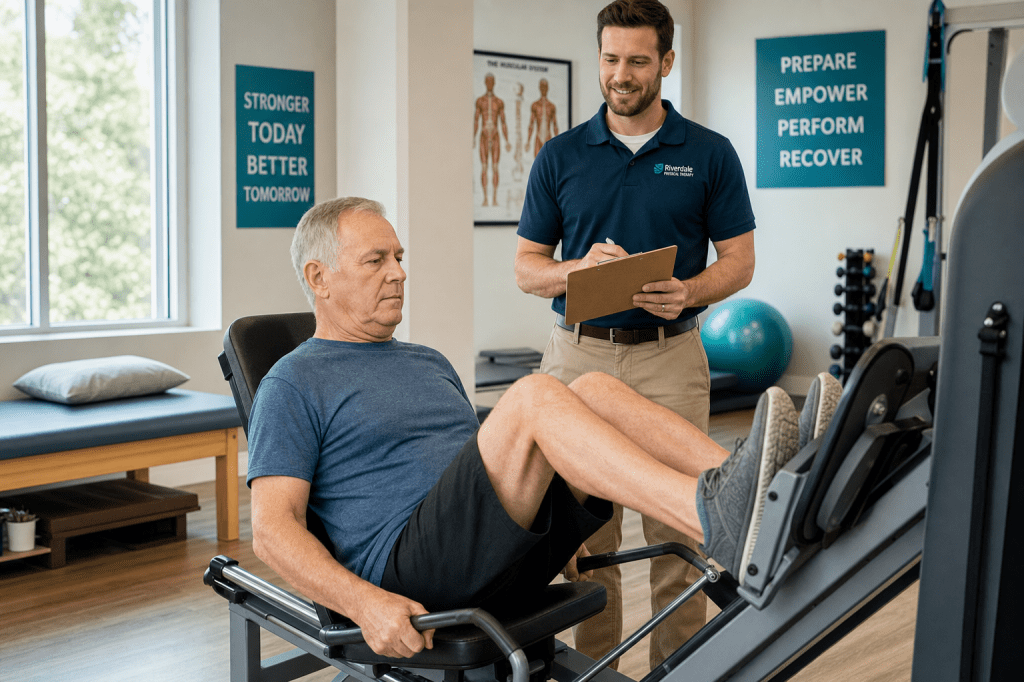
A 2026 multidimensional review published in JMIR Perioperative Medicine found that despite favorable pain outcomes, approximately 20 to 30 percent of patients continue to experience persistent functional limitations and measurable muscle weakness after TKA. The review identified quadriceps strength as the rate-limiting step in recovery — meaning that until adequate quad strength is restored, the rest of the functional picture stalls, regardless of how the pain numbers look.
This matters clinically because pain is a poor proxy for strength. A person can have near-zero pain at 12 weeks post-op and still struggle to rise from a chair without compensation, negotiate stairs safely, or return to recreational activity with confidence.
At CACC, we do not use pain ratings or goniometer readings alone to guide progression or discharge decisions. We use objective strength testing and functional performance benchmarks because that is what the research supports. If your previous PT program felt like it ended too soon, this may be why.

How Much PT You Need — And When You Need It Most
The question of PT dosing after TKA is one that insurers, surgeons, and patients all have opinions on. A 2024 study published in Sage Journals provided useful data to inform that conversation.
Researchers found that attending 10 supervised PT sessions following TKA was associated with statistically and clinically significant improvements in self-reported physical function at six months, and additional sessions beyond 10 did not produce appreciable further gains. At the same time, patients who remained consistently engaged through 12 weeks were more likely to achieve clinically meaningful flexion benchmarks — 96.7 percent reached 90 degrees of flexion compared to 95 percent among those who completed their program within six weeks.
The takeaway is not that more is always better or that fewer is sufficient. It is that early engagement, structural consistency, and hitting the right milestones at the right time matter more than total visit count. A front-loaded, well-designed program built around objective goals will outperform one that is extended out of habit or cut short due to insurance limits.
The Bottom Line
These findings reinforce something that good physical therapists have known for years: recovery from TKA is not passive. It requires a deliberate, periodized approach that begins before surgery, targets the right physiological variables — particularly quadriceps strength — and is structured around function rather than comfort alone. When patients and referring providers understand this, outcomes improve.
If you are preparing for a knee replacement, recently post-op, or feeling like your current recovery has plateaued, the evidence suggests there is meaningful room to improve your trajectory with the right interventions at the right time.
At CACC Physical Therapy in Parker, Colorado, my team and I specialize in evidence-based orthopedic rehabilitation, including comprehensive prehabilitation and post-surgical TKA programs. We work closely with surgeons and primary care providers to give patients the structured, outcome-focused care the research calls for. Schedule a consultation by calling our Parker office or visiting our website — your recovery does not have to be left to chance.




Leave a Reply