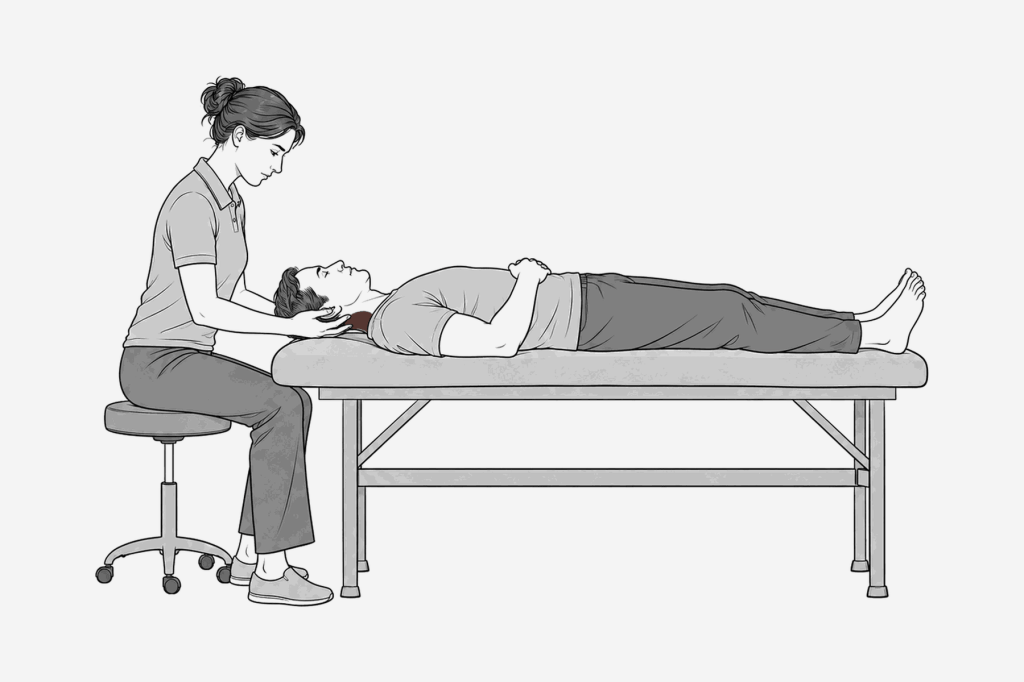
If your headaches start in your neck, does adding skilled hands-on treatment to your exercise program actually reduce how many headache days you get? A trial published in 2024 tried to answer that with a design good enough to separate real hands-on treatment from the placebo effect of being touched.
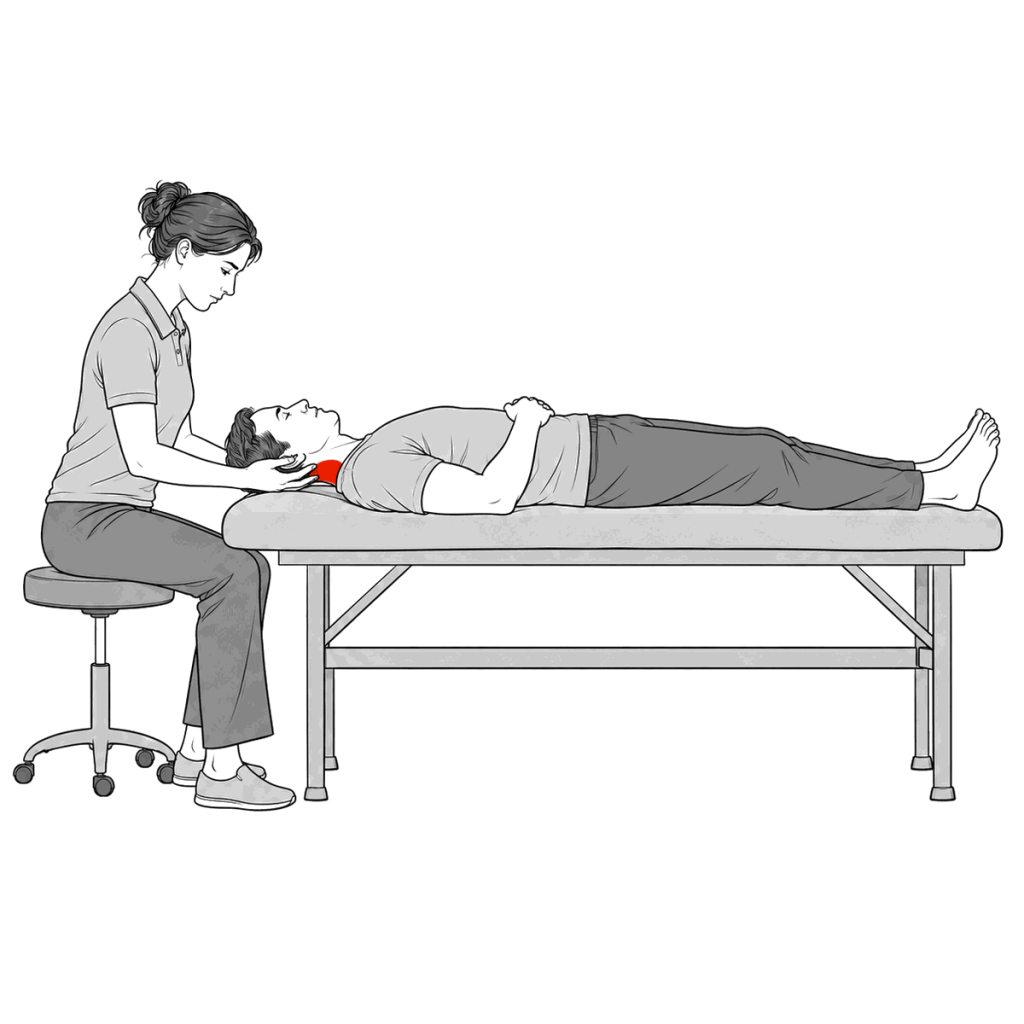
The study, briefly
Researchers ran a three-armed randomized trial in 99 adults with cervicogenic headache, meaning headache coming from the neck as defined by the International Classification of Headache Disorders criteria. Everyone got a neck exercise program. The three groups differed only in what was added on top:
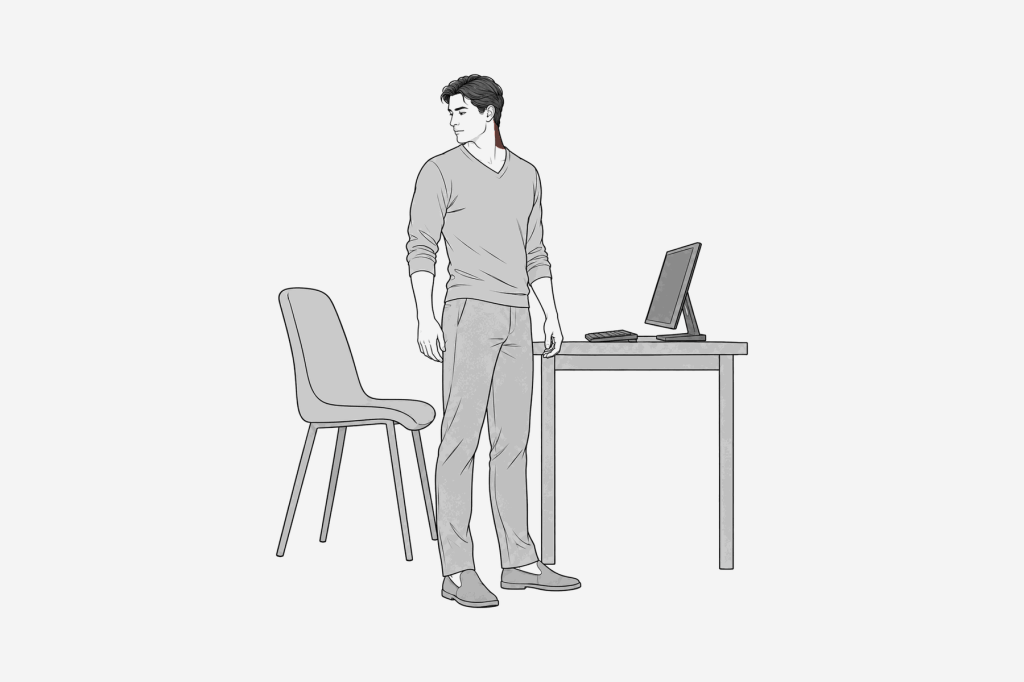
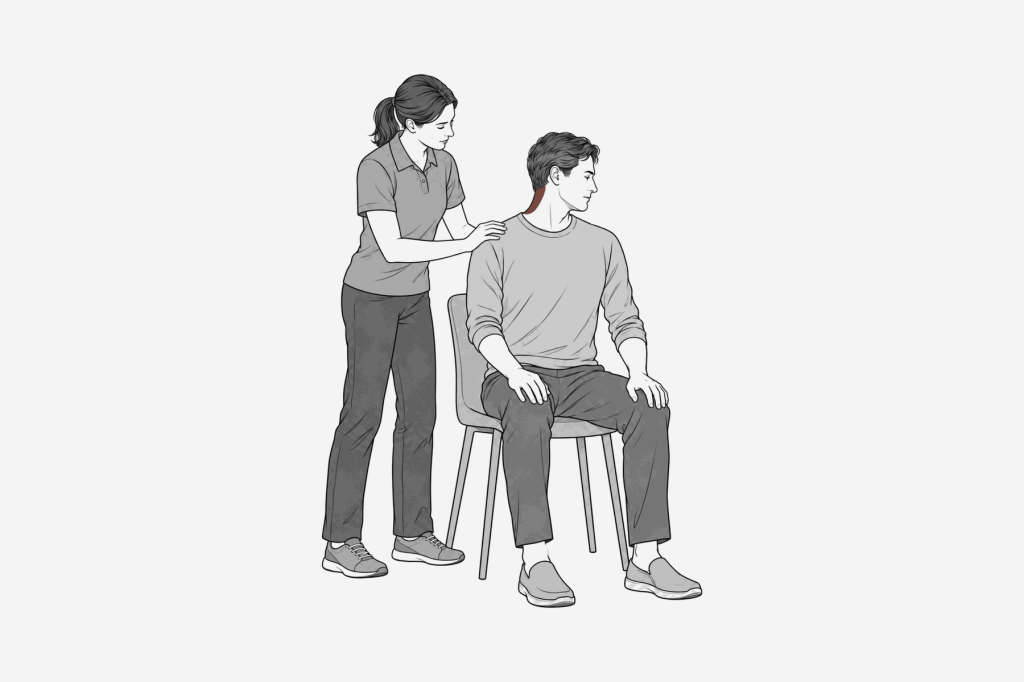
- Mulligan manual therapy (a specific hands-on system of gliding upper neck joints while you actively move) plus exercise.
- A convincing sham version of that same hands-on treatment, plus exercise.
- Exercise alone.
Treatment ran four weeks. Headache diaries and other outcomes were collected at baseline, 4 weeks, 13 weeks, and 26 weeks. Allocation was concealed, some outcomes were assessed by blinded examiners, and the analysis was intention to treat, which means people were counted in the group they were assigned to whether or not they completed everything (Satpute, Bedekar and Hall, Journal of Physiotherapy, 2024;70(3):224-233).
That sham arm is the part I care about most. Hands-on care is notoriously hard to study because attention, expectation, and physical contact all move pain scores on their own. A sham group is the only way to see what the technique itself is doing.
What they found
Start with the number that matters, which is headache days per month.
- Right after the four-week program, the hands-on group had 2 fewer headache days per month than exercise alone (between-group difference in change from baseline, 95% CI 2 to 3).
- At 26 weeks the gap had grown to 4 fewer headache days (95% CI 3 to 4). The benefit kept improving for months after the hands-on sessions had stopped, which is not what you expect from a short-term pain relief effect.
- The advantage also showed up across headache intensity, headache duration, medication intake, headache-related disability, upper neck rotation range of motion, and patient satisfaction, at every follow-up point.
- The sham group looked very similar to exercise alone. Pressure pain thresholds improved at the upper neck joints and suboccipital area, but not at the upper trapezius, which fits a targeted upper-cervical effect rather than a general relaxation effect.
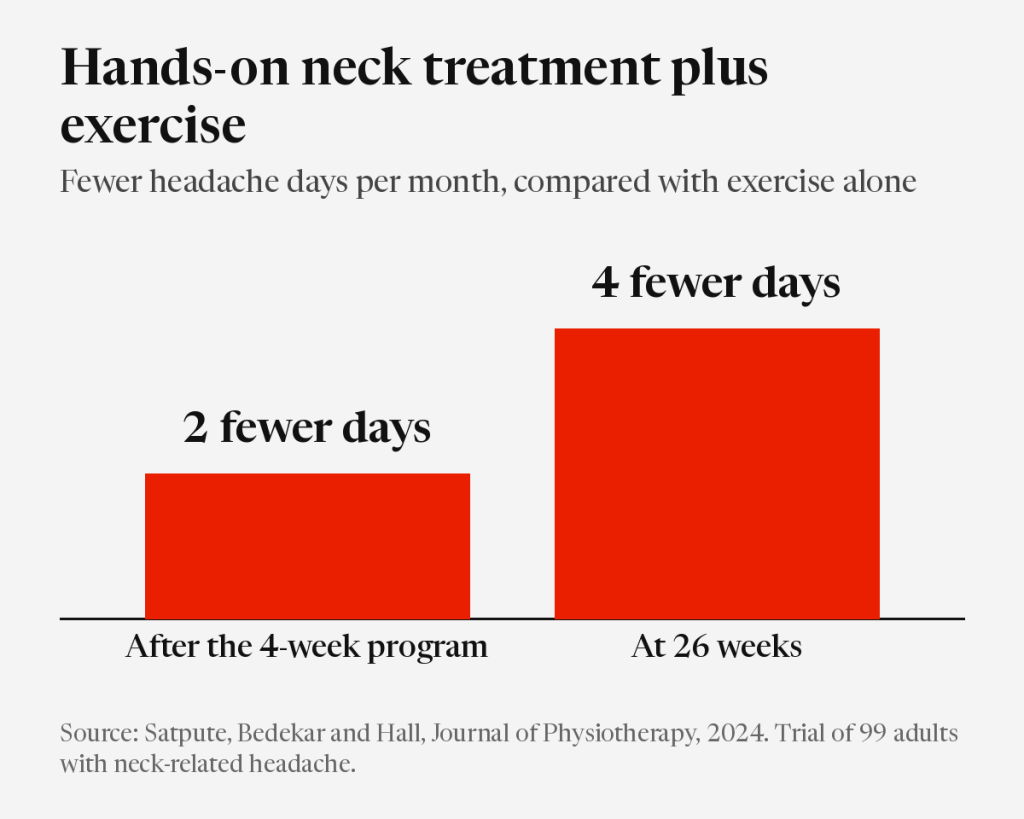
Put plainly: if you get 12 headache days a month, this is the difference between 12 and 8 by the six-month mark, on top of the improvement everyone got from exercise. For a headache patient, four days a month is a real month.
The catch
A few things keep me from overselling it.
This was a single-centre trial of 99 people, delivered by therapists trained in one specific manual therapy system. That is a good trial, not a definitive one, and it does not prove that every hands-on technique from every clinician produces the same result. Headache frequency and medication use were self-reported diaries, which is the standard in headache research but still self-report. And you cannot truly blind a person to hands-on treatment, even with a credible sham, so some expectation effect almost certainly remains in the numbers.
One more honest point: exercise alone still worked. The exercise-alone group improved. Manual therapy was the add-on that made it work better, not a replacement for the boring part.
What this means for you
If your headaches genuinely come from your neck, three practical conclusions follow.
Ask for both, not one. The winning combination in this trial was four weeks of neck exercise plus skilled hands-on treatment aimed at the upper neck joints. If you are getting only hands-on care with no exercise progression, you are missing the half that carried the exercise-alone group. If you are getting only a printed exercise sheet, you are leaving the extra two to four headache days on the table.
Keep going after discharge. The most striking part of this study is that the gap widened between week 4 and week 26. Whatever is happening, it depends on you continuing the program after the hands-on sessions end. In the clinic I tell people to plan for six months of maintenance work, not four weeks.
Confirm the diagnosis first. This trial only enrolled people whose headaches met formal criteria for a neck-driven headache. Migraine and tension-type headache are far more common, and upper neck manual therapy is not the answer for every headache. Sorting out which type you have is the first step, and I walk through the self-checks for that in headaches that come from your neck: how to tell, and what to do.
Worth noting alongside this: hands-on care for the upper neck is one of the few areas in musculoskeletal practice where a sham-controlled trial came out in favor of the technique. That is a higher bar than most manual therapy claims clear, and it is why this study is worth your attention rather than just another positive result. It also fits the broader pattern I keep coming back to, which is that the best outcomes tend to come from combining hands-on work with loading, not choosing between them. I made a similar argument about pacing and consistency in the benefits of physical therapy for chronic pain management.
What to do next
If you have had neck-related headaches for months and nobody has actually examined your upper neck, that is the gap to close. A comprehensive evaluation gives us 90 minutes to test your upper cervical rotation, reproduce and then settle your headache with hands-on assessment, and build the exercise progression that this trial says has to run alongside it. You leave with the plan, not a follow-up scheduling card.
References
- Satpute K, Bedekar N, Hall T. Mulligan manual therapy added to exercise improves headache frequency, intensity and disability more than exercise alone in people with cervicogenic headache: a randomised trial. Journal of Physiotherapy. 2024;70(3):224-233. doi:10.1016/j.jphys.2024.06.002. https://pubmed.ncbi.nlm.nih.gov/38902195/
- International Headache Society. 11.2.1 Cervicogenic headache. International Classification of Headache Disorders, 3rd edition. ichd-3.org, section 11.2.1 Cervicogenic headache



Leave a Reply