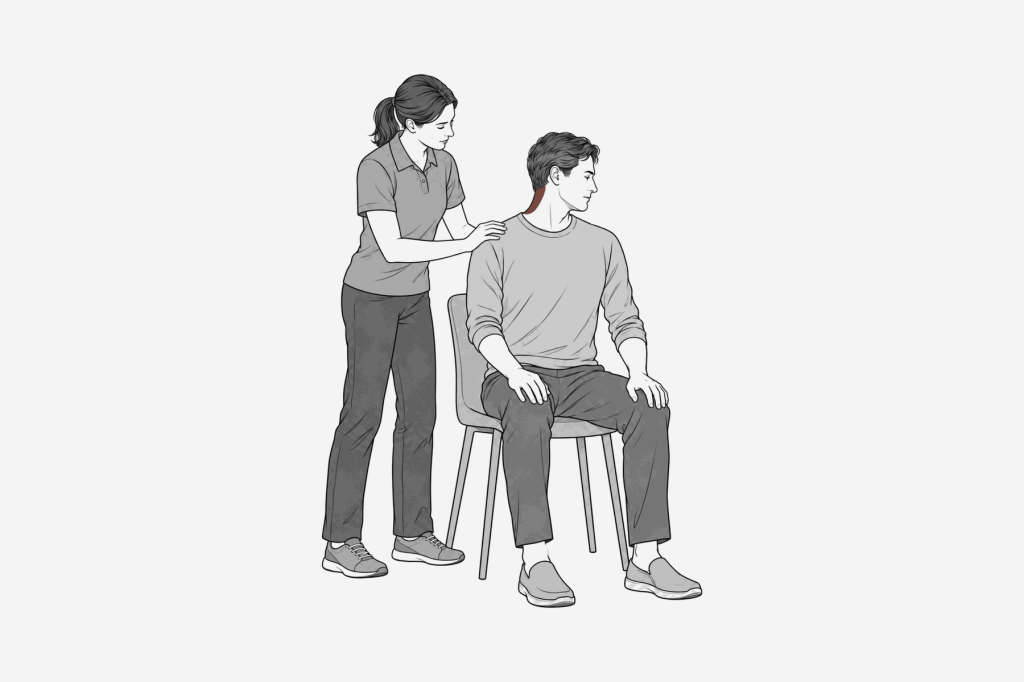
After a rear-end collision, most people get some version of the same advice: keep moving, do some neck exercises, it should settle down. The question nobody usually asks is whether it matters who teaches you those exercises and whether anyone progresses them. A 2024 review pooled 11 trials to find out.
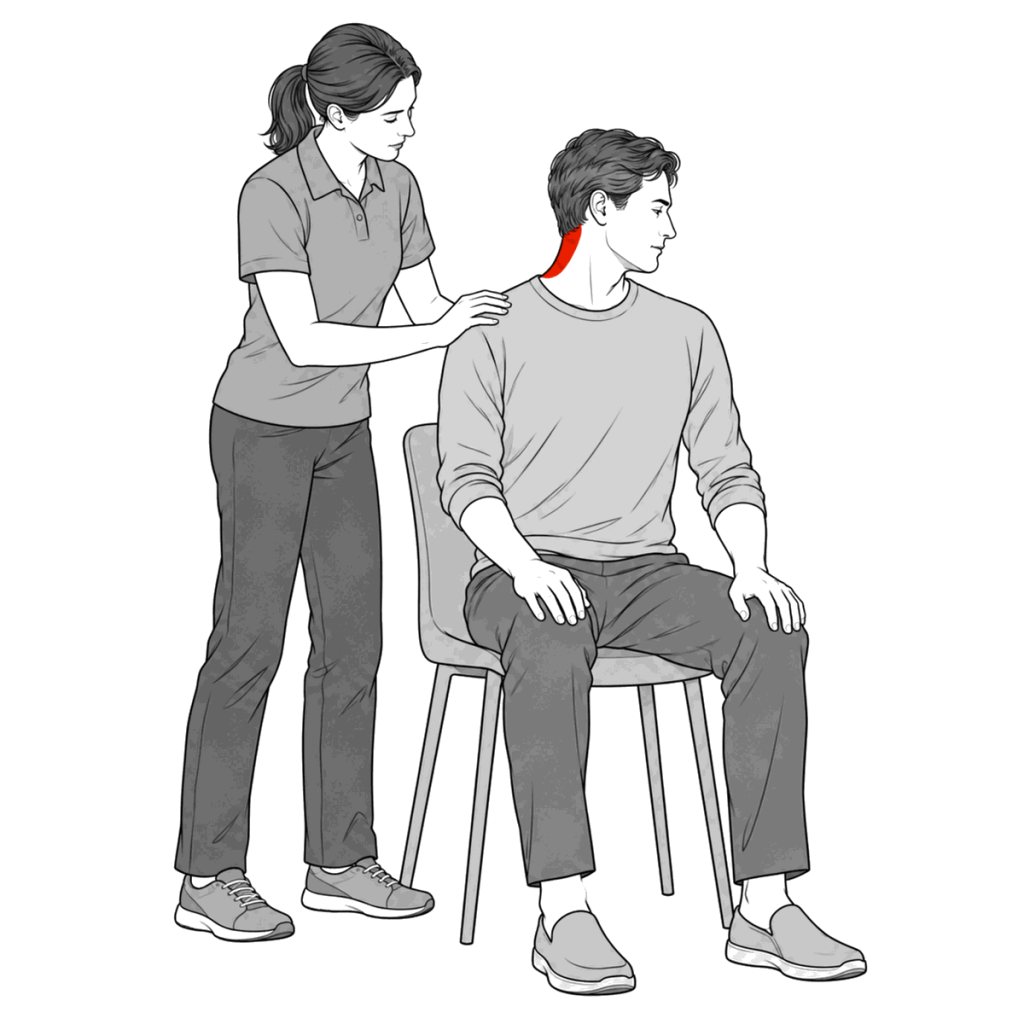
The study, briefly
Researchers in Spain ran a systematic review and meta-analysis of randomized controlled trials in people recovering from whiplash injury, searching PubMed, ScienceDirect and Web of Science through May 31, 2023 (Munoz Lazcano et al., American Journal of Physical Medicine and Rehabilitation, 2024). Eleven randomized controlled trials met their criteria.
The comparison here is the important part, and it is easy to misread. This was not neck exercise versus rest. It was guided neck-specific exercise therapy, meaning a clinician taught it, checked it and progressed it, against either a different neck-specific exercise program or the same kind of program done without guidance. Both sides of the comparison were exercising. The outcomes were neck pain and the Neck Disability Index, a questionnaire that scores how much your neck limits ordinary things like reading, driving, sleeping and concentrating. Only short-term time points were analysed.
What they found
- Guided exercise reduced neck pain more, with a standardized mean difference of minus 0.25 (95% confidence interval minus 0.38 to minus 0.12, P = 0.0002). A standardized mean difference is a way of pooling results measured on different scales, expressed in standard deviations. Minus 0.25 is a small effect that reached statistical significance.
- Disability improved more too, and by a bit more than pain did: standardized mean difference minus 0.35 on the Neck Disability Index (95% confidence interval minus 0.54 to minus 0.15, P = 0.0005). In plain terms, guided programs moved daily function slightly more than they moved the pain number.
- Dose was the deciding variable. Positive results appeared mainly in programs that ran longer than six weeks and included at least two sessions per week. Shorter or thinner programs are where the advantage disappeared.
- Not every individual trial found a benefit. The advantage emerged once the 11 trials were pooled together. That is normal for small effects, and it is also a reason not to oversell the finding.
The catch
These are small to modest effects, roughly a quarter to a third of a standard deviation. That is real, but it is not the kind of difference that turns a bad neck into a good one on its own. If you were hoping supervision is the missing ingredient that explains why your neck still hurts, this review does not support that story.
Only short-term outcomes were analysed, so we do not know whether the edge holds at six months or a year. The published abstract does not report the total number of participants across the 11 trials, which makes it harder to judge how much weight any single trial carried. And because the comparison group was also doing neck exercise, the finding tells you that guided and specific beats generic or unsupervised, not that exercise beats nothing.
There is also a limitation baked into this kind of research. “Guided” was not defined identically across 11 studies. In one trial that might mean weekly in-person sessions with hands-on assessment. In another it might mean a few visits with phone check-ins. Pooling them gives you an average of a fuzzy thing.
What this means for you
In the clinic, the pattern I see after whiplash is rarely a lack of willingness. It is a printed handout with five exercises, no progression, and no one to tell you whether the tightness you feel on rotation is something to push into or back off from. This review is essentially a measurement of what that gap is worth, and the answer is: a small but consistent amount, on both pain and function.
Here is how I would translate it:
- Plan for more than six weeks, at least twice a week. That was the dose where results showed up. If you are three weeks in and considering stopping because progress feels slow, you have not run the program long enough to judge it.
- Ask for specific, not general. Neck-specific means your program targets the deep neck flexors, the neck extensors and scapular control, and gets harder as you improve. “Do some stretches and stay active” is not the intervention that was tested.
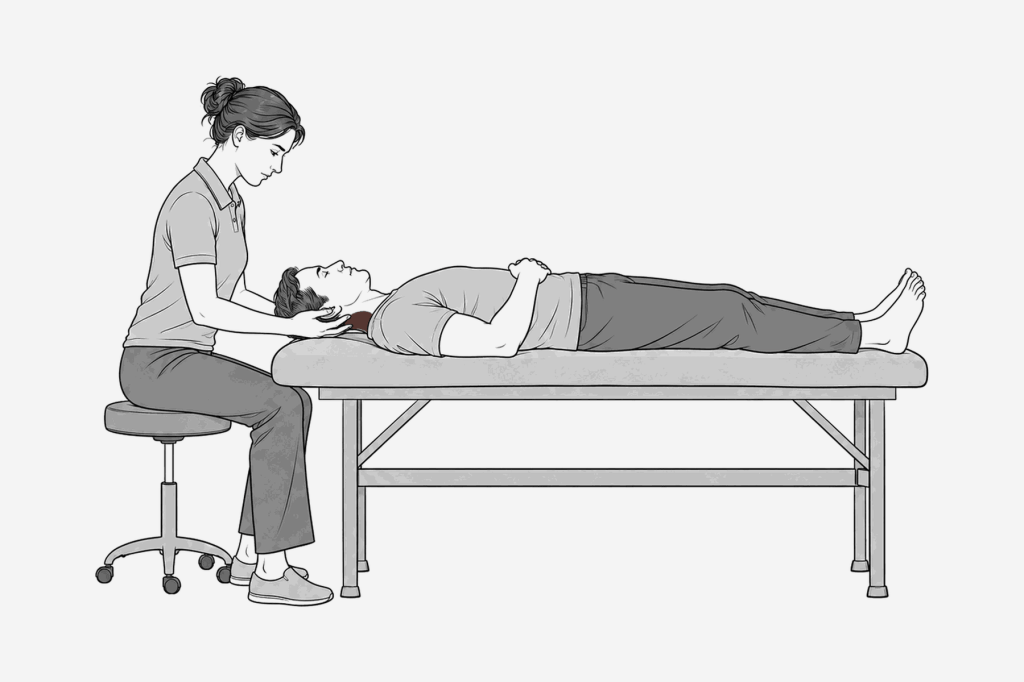
- Use supervision where it earns its keep. You do not need a therapist watching every repetition for six weeks. You need someone to establish the starting point, correct the technique early, and reset the plan when you plateau. Everything between those visits is yours.
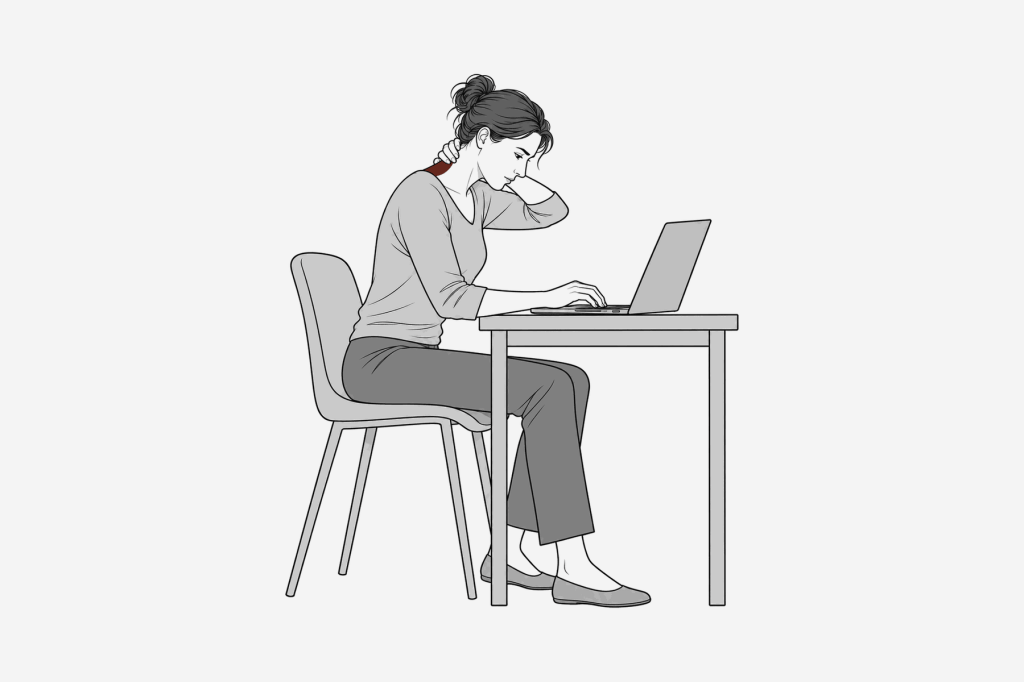
- Track function, not just pain. Disability improved slightly more than pain in this analysis. So measure whether you can drive, sleep and work at a screen more comfortably, rather than watching a single pain number all week.
- Do not let the small effect talk you out of care. Small effects on pain and disability that stack with time, education and load tolerance are how most necks actually get better.
If your neck pain has been going on for months rather than weeks, the conversation widens beyond exercise selection into sleep, stress, load tolerance and how the nervous system is behaving. I wrote about that broader picture in a post on physical therapy for chronic pain management, and there is a related lesson from the low back literature in my breakdown of cognitive functional therapy for chronic low back pain: how a program is delivered and understood can matter as much as which exercises are on the list.
Where I would start
The takeaway is not “book more appointments.” It is “get the program right, then run it long enough.” If you want someone to actually examine your neck, establish where you are starting from, and hand you a plan that progresses, a comprehensive evaluation is a full hour, one on one, and you leave with the plan written down. If you already know what is going on and just need the progression built and adjusted, a home exercise program is the leaner option. Either way, give it more than six weeks before you decide whether it worked.
References
- Munoz Lazcano P, Rojano Ortega D, Fernandez Lopez I. Effects of a guided neck-specific exercise therapy on recovery after a whiplash: a systematic review and meta-analysis. American Journal of Physical Medicine and Rehabilitation. 2024;103(11):971-978. doi:10.1097/PHM.0000000000002460. PMID 38466196. https://pubmed.ncbi.nlm.nih.gov/38466196/


Leave a Reply