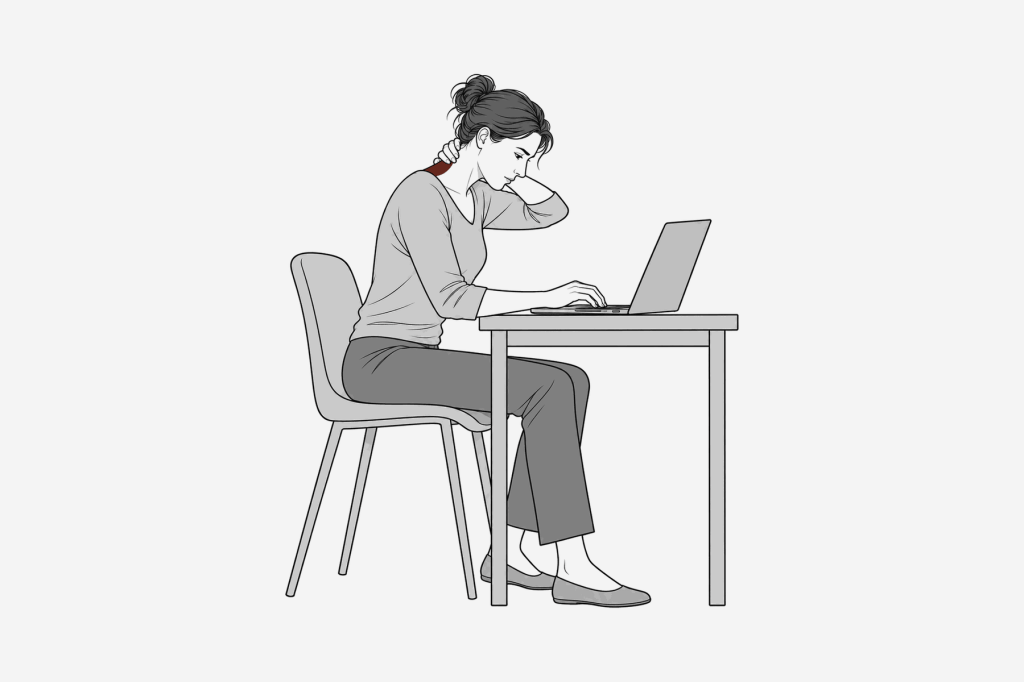
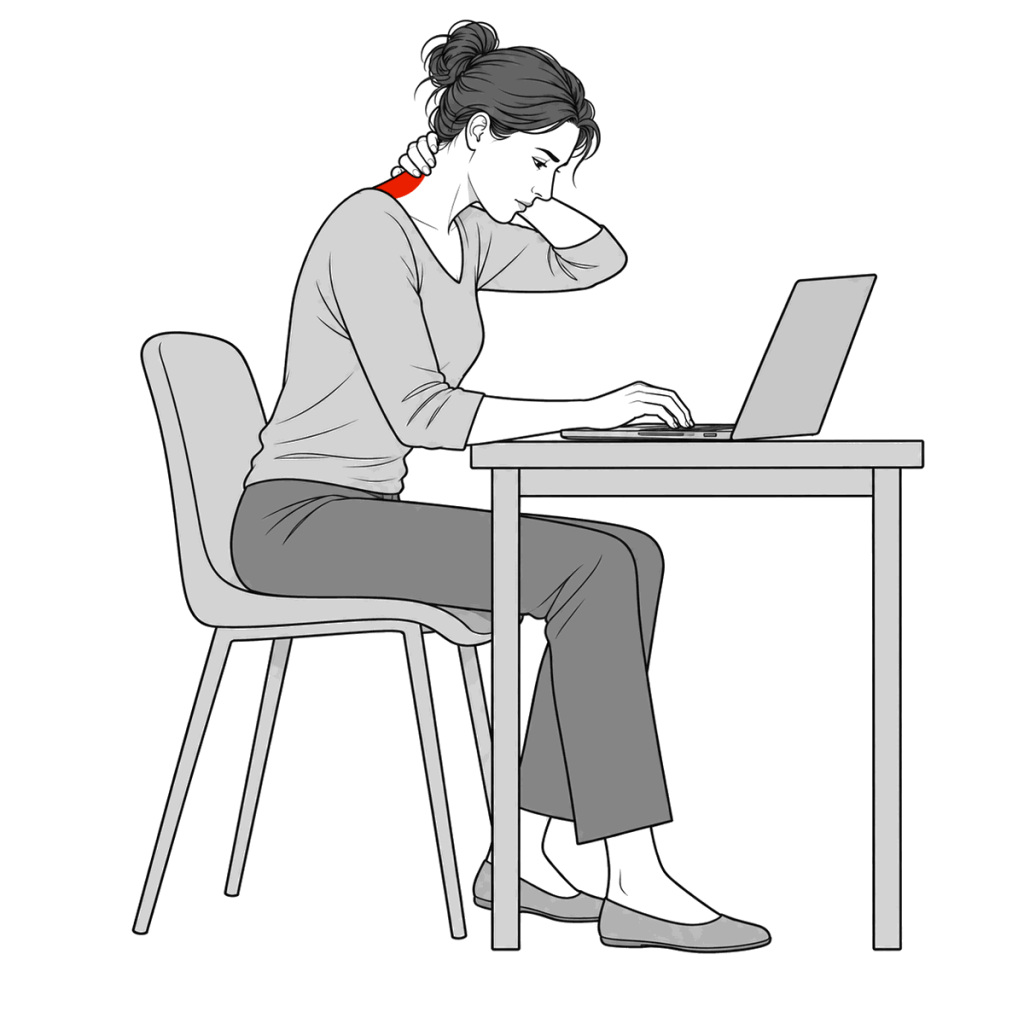
Some headaches do not start in your head. They start at the base of your skull, on one side, and creep up and over toward your eye or temple over the course of an afternoon. Turning your head to check a blind spot makes it worse. You can often find one exquisitely tender spot just below the skull on the painful side, and pressing it reproduces the exact headache you know.
That pattern has a name: cervicogenic headache, meaning headache driven by the joints, discs, and soft tissue of the neck. It matters that you identify it, because the treatment is genuinely different from migraine treatment, and because it responds well to the right physical therapy.
What it feels like, and how it differs from migraine
The formal definition requires headache plus evidence that a neck disorder is causing it, including things like reduced neck range of motion and headache clearly worsened by neck movements or positions (International Classification of Headache Disorders, criterion 11.2.1). In plain language, the pattern usually looks like this:
- One-sided and side-consistent. It tends to stay on the same side, attack after attack, rather than switching.
- Starts low, travels up. Base of the skull or upper neck first, then forward to the temple, forehead, or behind the eye.
- Provoked by neck position or movement. Long drives, a night on the wrong pillow, sustained looking down, or holding a phone to one ear.
- Stiff neck that you can feel. Turning your head one direction is noticeably more restricted than the other.
- Reproducible by pressure. Firm pressure on the upper neck on the painful side brings on your familiar headache, not just local soreness.
- Duller and steadier than migraine. Migraine features like nausea and light sensitivity can be present but are usually milder, and true visual aura points away from the neck.
Migraine, by contrast, more often switches sides, throbs, comes with significant nausea or light and sound sensitivity, and is not reliably triggered by which way you turn your head.
Why it happens
The upper three neck segments share nerve traffic with the nerve that supplies sensation to your face and head. Signals arriving from an irritated upper neck joint and signals arriving from your forehead land in overlapping territory in the brainstem, so your brain can genuinely misread neck input as head pain. That is why you feel it above your eye when the actual problem is two inches below your skull.
The usual contributors are sustained positions, low neck endurance, a stiff upper cervical segment, and sometimes an old whiplash or head impact. There is no structural damage to fear here.
What the evidence actually says
Two useful findings.
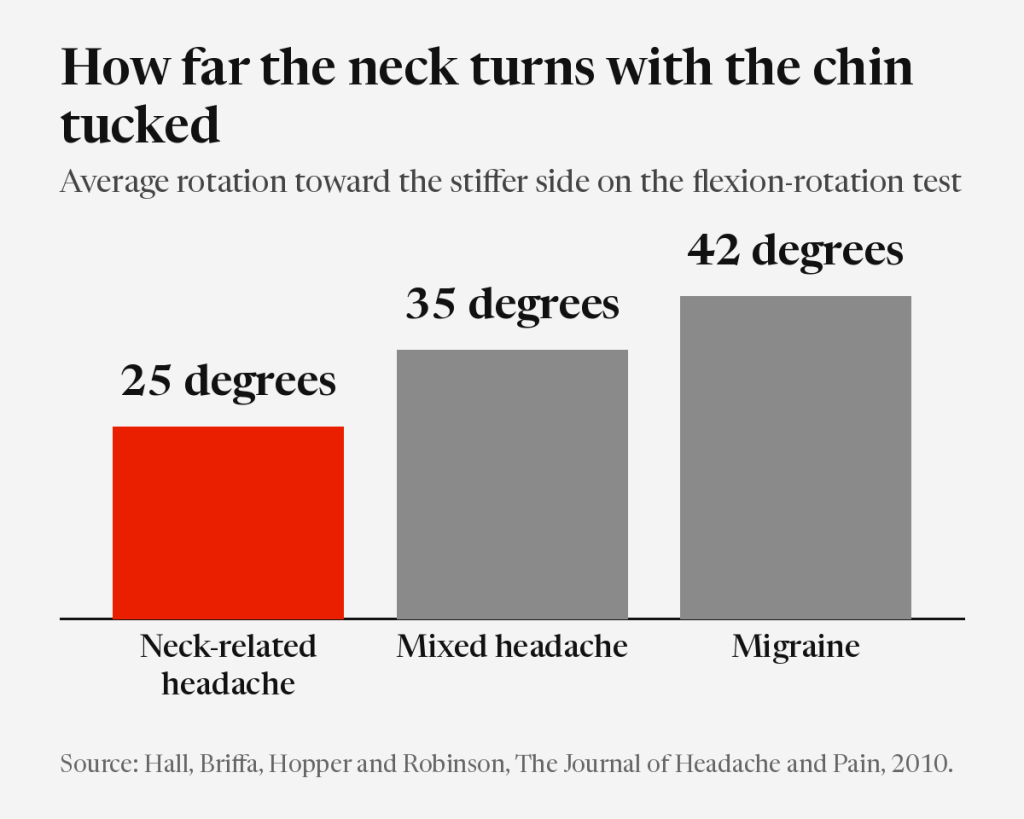
First, this is a measurable pattern, not a vague one. Using the cervical flexion-rotation test (chin tucked to the chest, then rotating the head), people with likely cervicogenic headache averaged only 25 degrees of rotation to their restricted side, compared with 42 degrees in migraine and 35 degrees in mixed headache types. An experienced examiner using that single test classified people correctly 85 percent of the time, with a 30 degree cutoff (Hall et al., The Journal of Headache and Pain, 2010;11(5):391-397). A systematic review pooling physical examination findings similarly reported reduced flexion-rotation range of about 17.7 degrees and reduced neck flexion strength in cervicogenic headache compared with migraine (Anarte-Lazo et al., BMC Musculoskeletal Disorders, 2021;22:755).
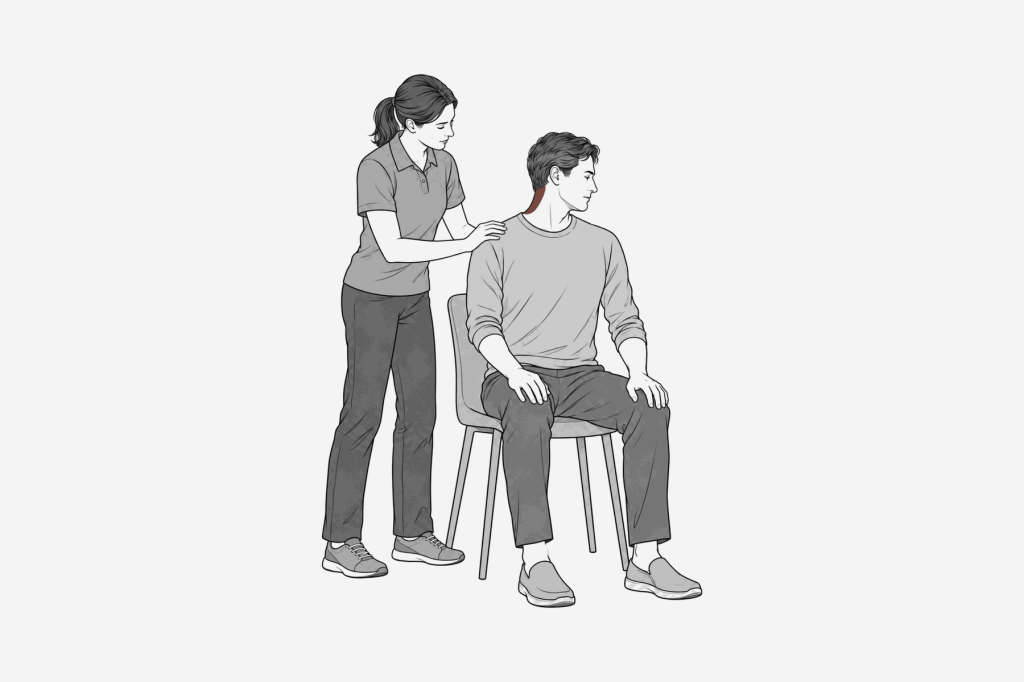
Second, treatment works, and the good version has two ingredients. A 2024 randomized trial found that adding skilled hands-on treatment of the upper neck to a neck exercise program produced 2 fewer headache days per month than exercise alone right after four weeks, growing to 4 fewer days by six months, while a convincing sham hands-on treatment performed no better than exercise alone (Satpute et al., Journal of Physiotherapy, 2024). I broke that study down in detail in can hands-on neck treatment cut headache days, including the limitations.
What to do about it
Start with the self-checks, then the program. Track headache days on a calendar from day one, because that is the outcome that matters and memory is unreliable.
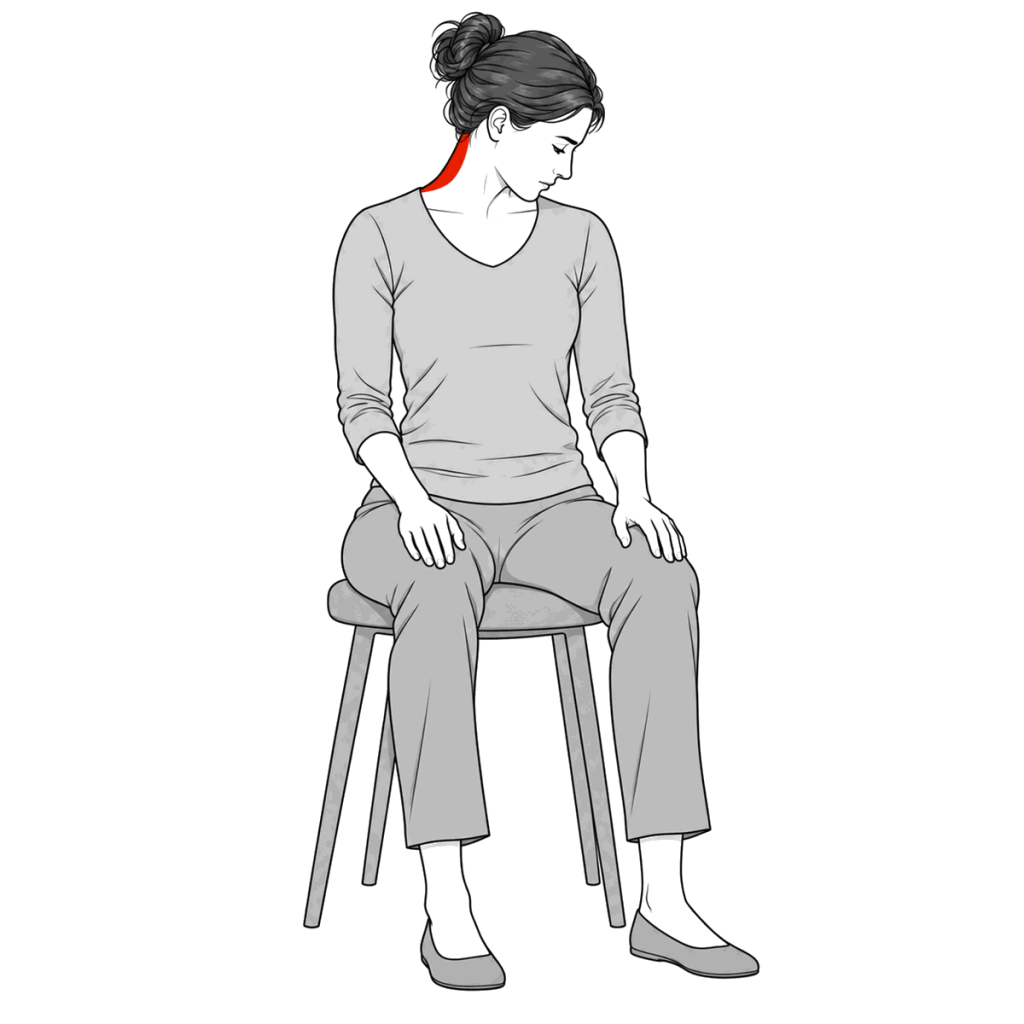
- Self-check one: the rotation comparison. Sitting tall, tuck your chin firmly toward your chest, then slowly turn your head each way while keeping the tuck. Note whether one side is clearly more limited. A big left-right difference in that tucked position points at the upper neck.
- Self-check two: the reproduction test. With your thumb or a knuckle, apply firm sustained pressure to the muscle and joint area just below your skull on the painful side for 20 to 30 seconds. If it brings on your familiar headache and then eases, your neck is involved.
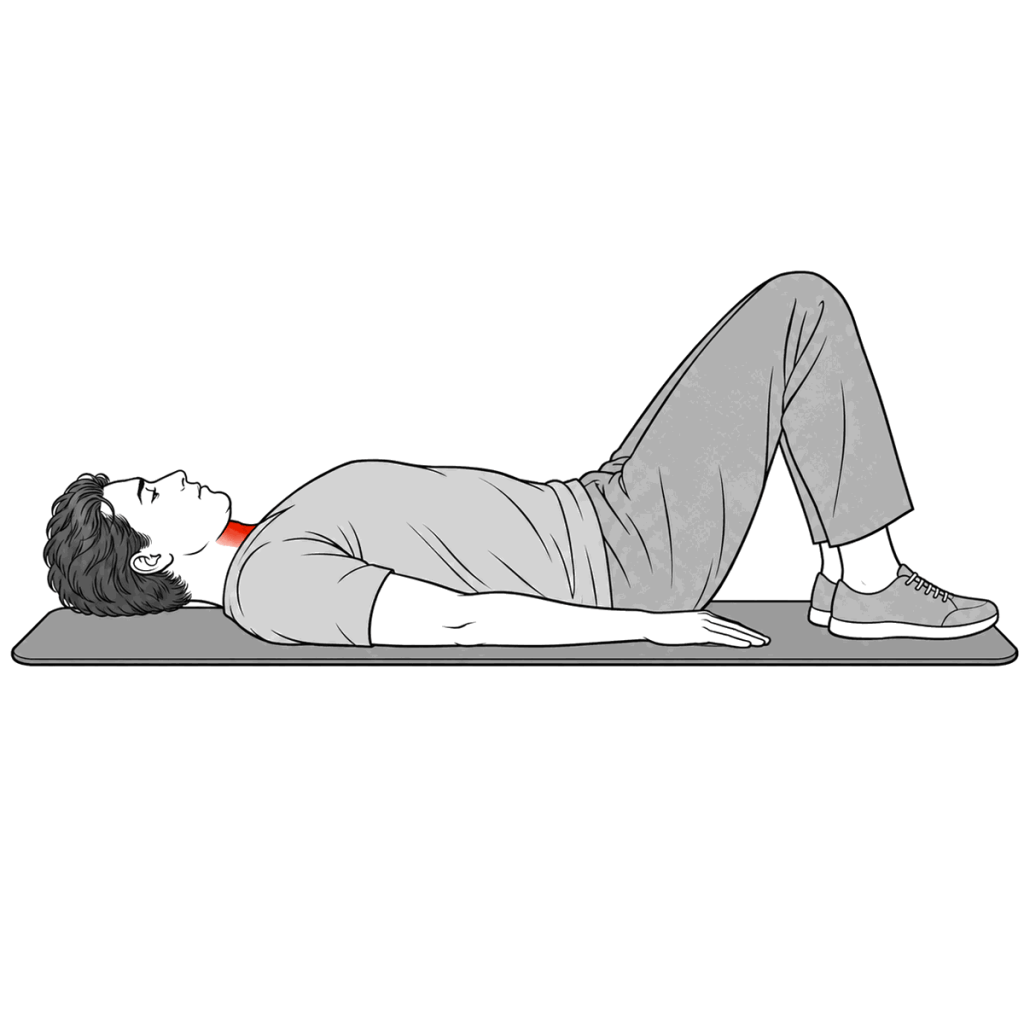
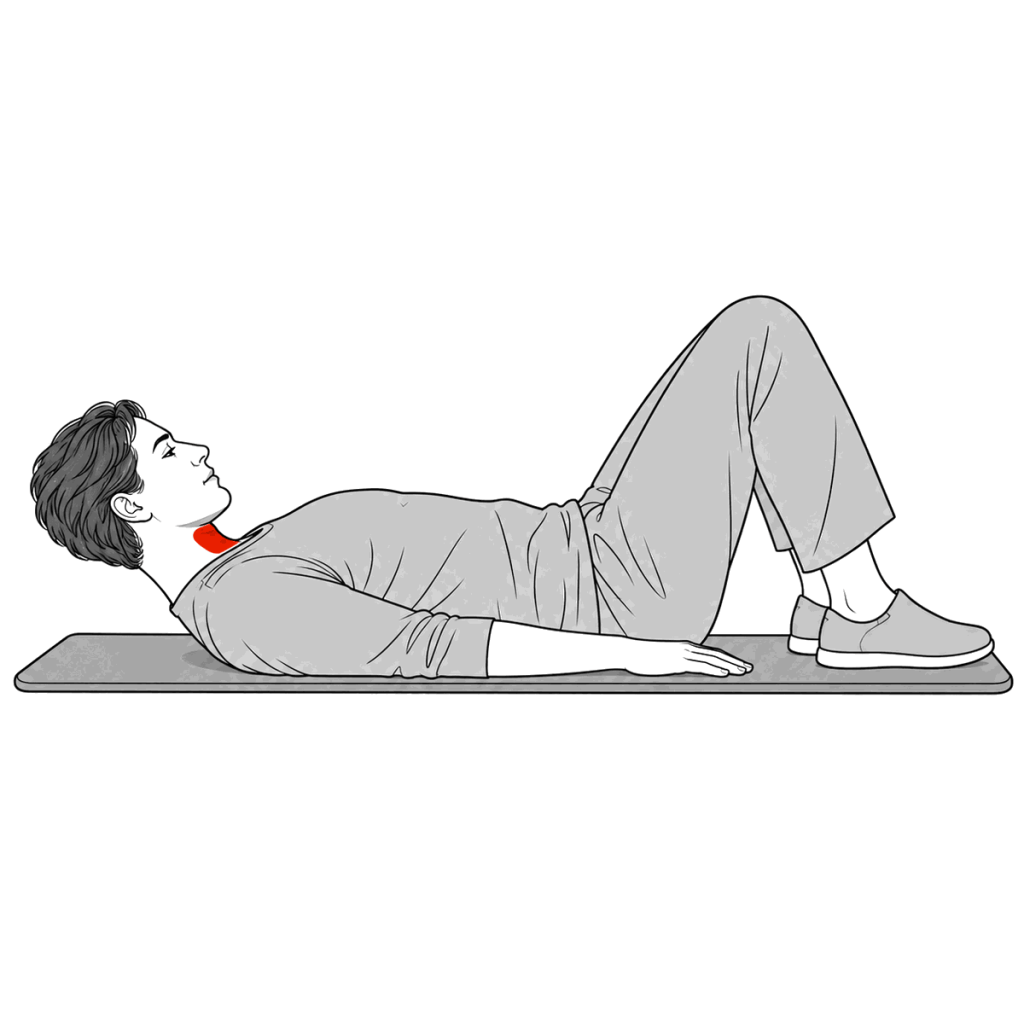
- Chin nods for endurance. Lying on your back with no pillow, gently nod your chin a half inch toward your throat without lifting your head. Hold 10 seconds, rest 5, repeat 10 times. Once daily. Form cue: quiet, low-effort, deep in the front of the neck. If your jaw clenches or the surface muscles bulge, ease off.
- Head lift holds. Same setup, chin gently tucked, then lift your head an inch off the floor and hold as long as your form stays clean. Three efforts, once daily. Log the time each week. This is your progress number.
- Upper neck rotation, in the tucked position. Chin tucked, rotate slowly to the restricted side, hold 5 seconds at the point of stiffness (not pain), 8 repetitions, twice a day.
- Scapular and thoracic work. Rows and prone extensions, 3 sets of 10 to 12, three days a week. The neck does not work alone, and the trial above paired hands-on care with an exercise program, not with rest.
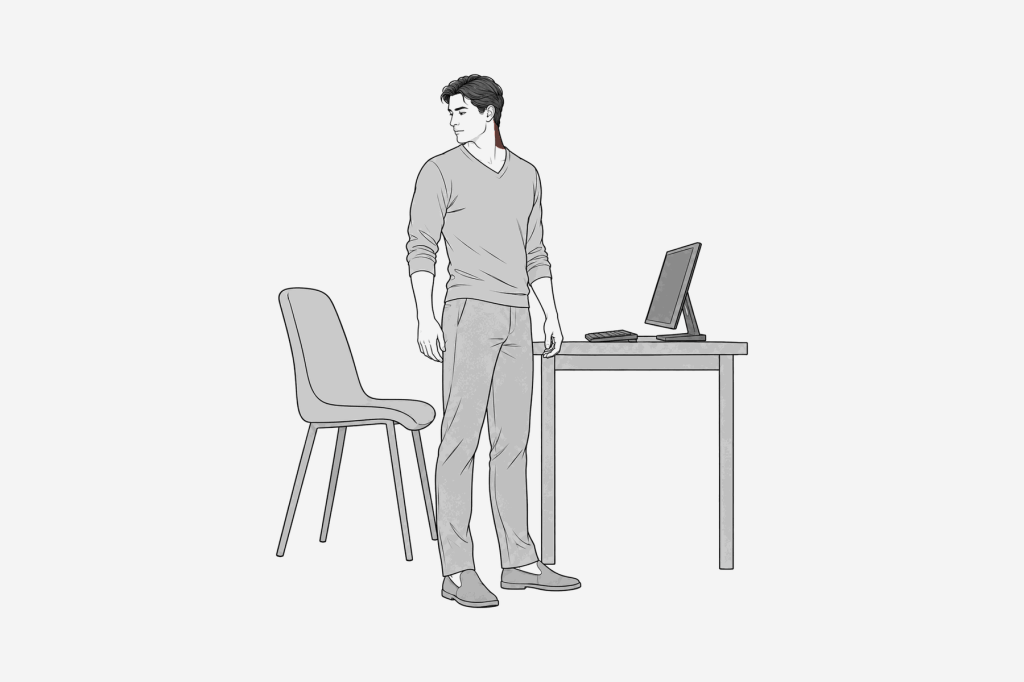
- Reduce the provocations you control. Raise your screen to eye level, use a pillow that keeps your neck in line rather than propped high, and break up sustained looking-down time every 30 minutes. If desk work is the main driver, I go through the whole picture in neck pain from desk work: what actually helps, and if your neck also clicks or grinds when you turn it, that is usually harmless (see my joints are making noises, should I be worried).
Give it six weeks and compare headache days per month against your baseline. In the 2024 trial the benefit was still growing at six months, so slow visible progress is normal and is not a reason to quit.
Red flags: when to get it looked at in person
Get medical evaluation promptly, before starting any self-treatment, if any of these apply:
- The worst headache of your life, or one that came on suddenly like a switch flipping.
- Headache with fever, stiff neck you cannot move, confusion, or a rash.
- New neurological symptoms: slurred speech, facial droop, double vision, difficulty swallowing, dizziness or unsteadiness, or drop attacks.
- Headache that began after a car accident, fall, or blow to the head.
- Headache that is clearly worse when you lie down, cough, or strain, or that wakes you from sleep.
- New headache pattern starting after age 50, or with unexplained weight loss, night sweats, or a cancer history.
- Arm numbness, tingling, or weakness, or clumsy hands.
Anything on that list is a physician conversation first. Physical therapy for the neck comes after those are ruled out.
Where to start
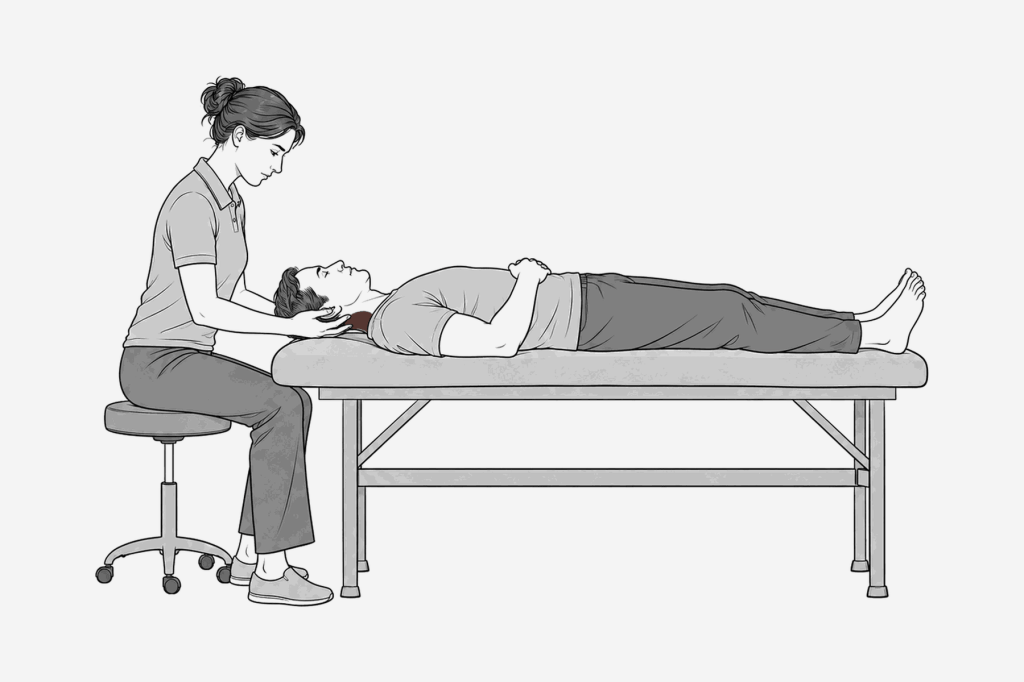
If your headaches have been going for months and no one has actually tested your upper neck rotation or tried to reproduce the headache with hands-on assessment, that is the missing step. A comprehensive evaluation is a full hour, one on one: we screen the red flags, run the flexion-rotation test, see whether your headache is reproducible from the neck, and you leave with the exercise progression and a headache-day tracker rather than a vague plan to come back.
References
- International Headache Society. 11.2.1 Cervicogenic headache. International Classification of Headache Disorders, 3rd edition. ichd-3.org, section 11.2.1 Cervicogenic headache
- Hall TM, Briffa K, Hopper D, Robinson K. Comparative analysis and diagnostic accuracy of the cervical flexion-rotation test. The Journal of Headache and Pain. 2010;11(5):391-397. https://pmc.ncbi.nlm.nih.gov/articles/PMC3452271/
- Anarte-Lazo E, Carvalho GF, Schwarz A, Luedtke K, Falla D. Differentiating migraine, cervicogenic headache and asymptomatic individuals based on physical examination findings: a systematic review and meta-analysis. BMC Musculoskeletal Disorders. 2021;22:755. https://pmc.ncbi.nlm.nih.gov/articles/PMC8417979/
- Satpute K, Bedekar N, Hall T. Mulligan manual therapy added to exercise improves headache frequency, intensity and disability more than exercise alone in people with cervicogenic headache: a randomised trial. Journal of Physiotherapy. 2024;70(3):224-233. https://pubmed.ncbi.nlm.nih.gov/38902195/



Leave a Reply